
My summer squash did diddly this year — I planted seeds three times and three times the critters ate the plants before they could get to any size at all. Fortunately, I managed to grow some winter squash, started from the saved seed of an Iranian and a long neck pumpkin of two I had bought last year from a nearby farmers’ market. I started the seeds in flats that I put up on sawhorses in the back yard in about early July. (Sawhorses were to keep the foraging groundhogs, cats, slugs, squash bugs and whatever else that inhabits our little wildlife acre from eating the plants –AGAIN!). I planted out decent-sized plants in mid-July and by September, they were sprawled all over the west side of the garden. They produced some really great squash, which we harvested before Hurricane Sandy tromped through. And the cardboard box of Iranian squash and long neck pumpkin now stored on our unheated back porch has bucked me up no end. (I had gone into a deep, existential funk; if I couldn’t even grow ZUCCHINI for pete’s sake, what GOOD was I!?).
Winter squash are theoretically easy to grow. You stick the plant in the ground in about June and harvest between 90 and 120 days later, depending on variety. In my experience here on the Upper Eastern Shore, they are squash bug magnets. If you don’t catch those suckers early and crush ‘em – or regularly squirt them off plants with soapy spray (but crushing is better and infinitely more satisfying), you won’t have winter squash.Winter squash, a member of the Cucurbitae family that includes melons and cucumbers, is called that not because we harvest them in winter, but because many have very dry flesh and as a result store wonderfully so we can eat them all winter. (I once grew a 15-pound Blue Hubbard that I harvested in October and we ate in late May). Not only that, they are packed with beta carotene (Vitamin A, critical to eyes and other body parts), Vitamin C, and potassium among others, and retain as much as 85% of their nutritional value over months of storage. (Generally speaking: the darker the flesh, the harder she shell, the longer it stores and the more nutrients it retains.).

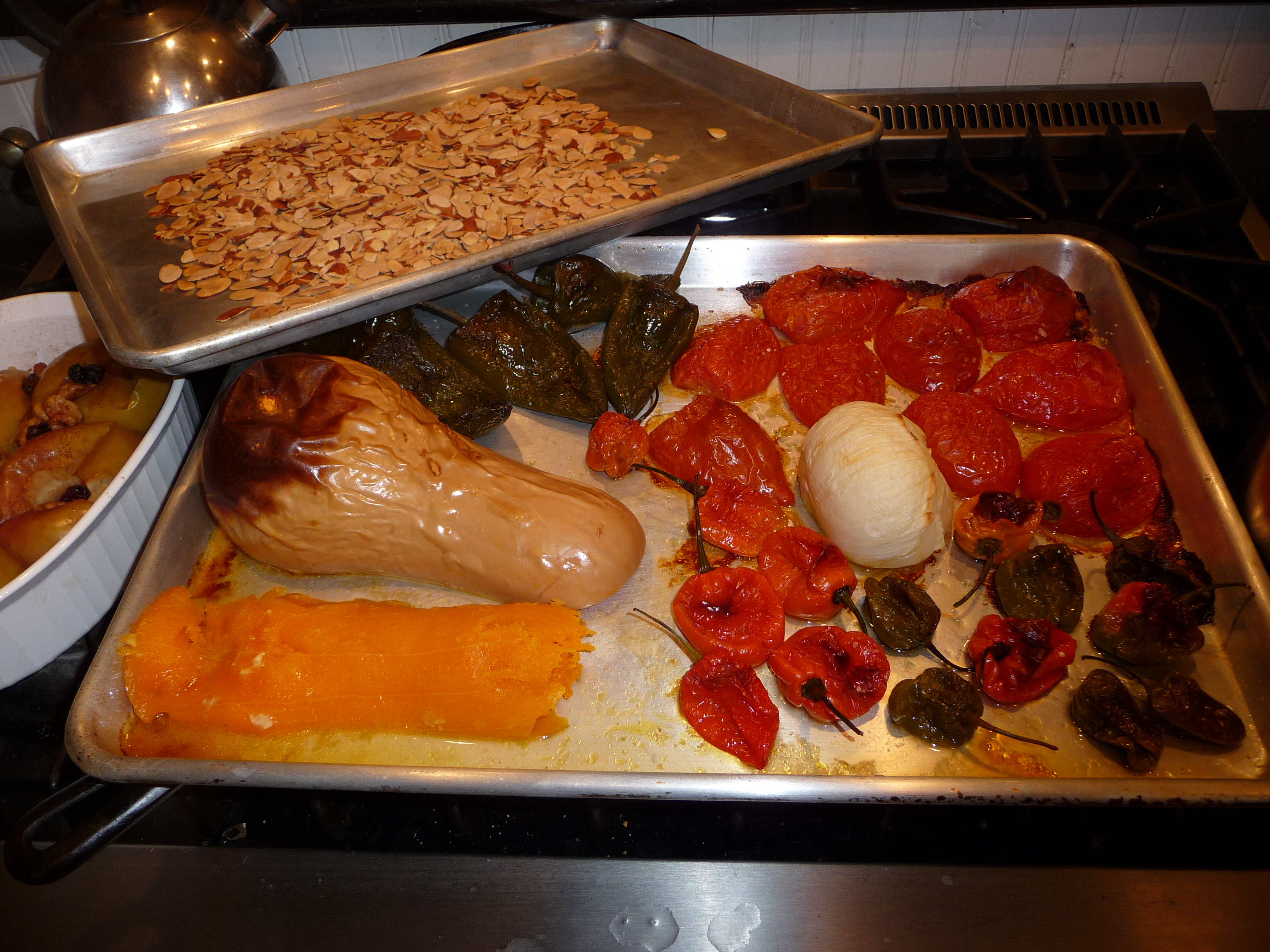
I’ve roasted some crescent Iranian slices for salad with arugula, toasted walnuts and goat cheese, cubed another and roasted it with paprika, garlic, maple syrup and salt and pepper then added it warm to a plate of spinach and French lentil salad. A couple of days ago, when it was chilly and blustery, I finally roasted the spare butternut our daughter dropped off months ago before she went to sea along with the very last of the mild habaneros and Big Mama tomatoes and made soup. The rest of the winter squash still sit in a cardboard box on our unheated mud porch waiting to be used throughout the winter. Yum yum yum.

Roasted Butternut and Pepper Soup
1 butternut or other winter squash, halved and seeded
1 small onion peeled and halved
4 small very mild habaneros or other mildly spicy pepper
1 medium sweet pepper, halved and seeded
2 cloves garlic, unpeeled
4-5 paste tomatoes, halved ( a tin of fire-roasted tomatoes would work just as well)
olive oil for rubbing over vegetables
1 small apple, cored
1-2 tsp berbere spice
1 tsp smoked paprika
dash of Pick a Pepper sauce
salt and pepper
3 cups chicken stock or vegetable stock or water
Grease or cooking-spray a baking sheet. Lightly oil the vegetables, rubbing them all between your hands. Put the butternut cut-side down on the sheet and surround with the rest of the vegetables and the apple. Roast in a 350-degree oven for about 45 minutes or until they’re all soft (the onion may still be a little stiff). Pull skin away from squash, tomatoes and apple (if you do this when they are hot, it helps to wear rubber gloves to keep from searing your fingers). Peel garlic. Put it all into a pot with the spices and simmer for about 15 minutes. Run a hand-blender through it, or wait until it cools some and puree it in the blender. Serve with chopped herbs, a dash of chili oil, and some crumbled feta or blue cheese. It’s really nice on a cold evening by the fire with a glass of red wine and some toasted baguette or fresh whole grain bread.
 Nancy Taylor Robson