Yes, it’s been a hard season so far. Lotsa water has encouraged fungal diseases and blight among other things. But it seems churlish to complain since we’re often faced with drought, so given a choice, I’ll take this summer over a lot of others we’ve gardened through.
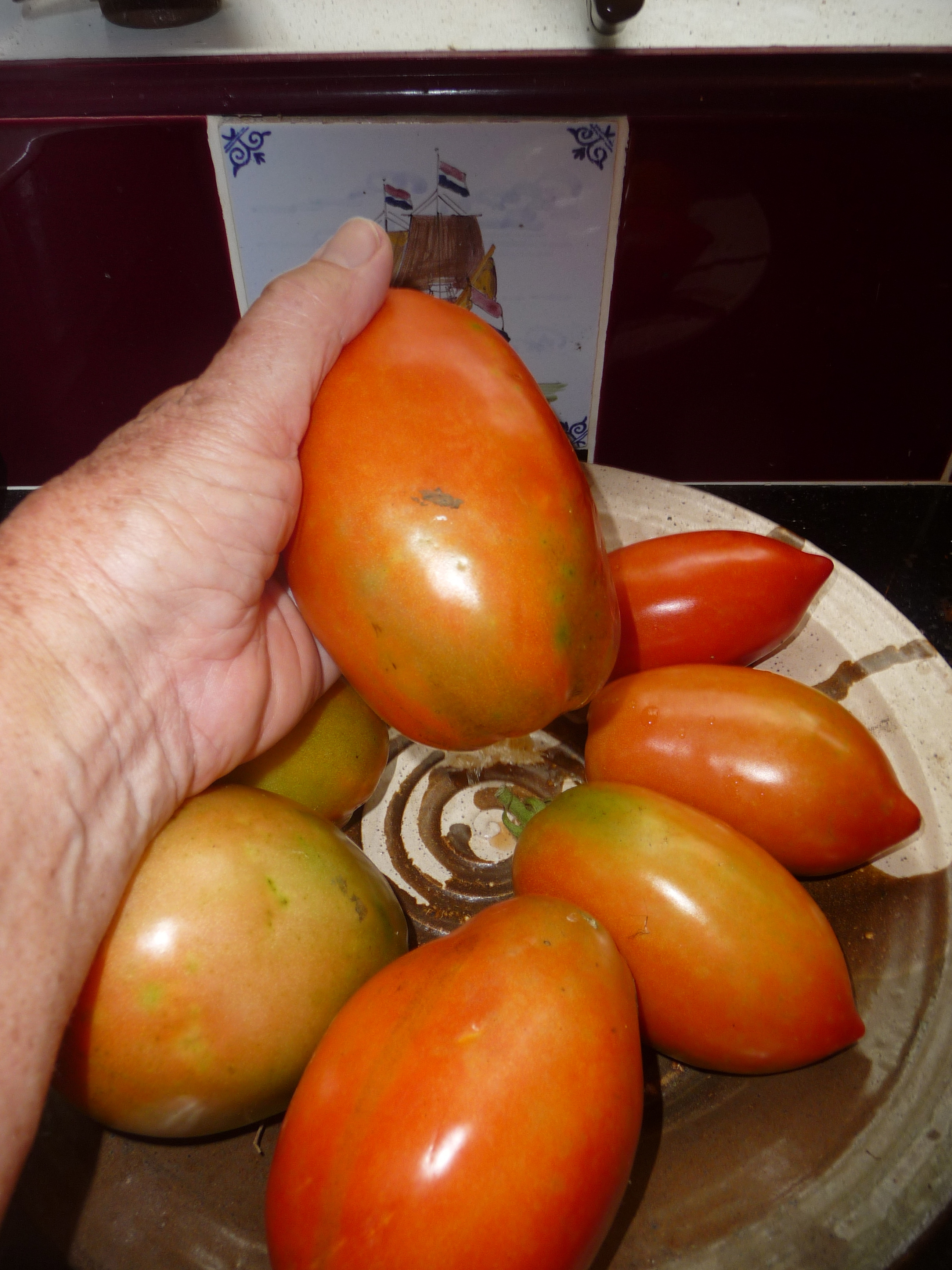
Even though it’s been difficult, I’ve got a semi-steady supply of tomatoes coming in to deal with. More paste varieties than slicers, which was a conscious choice when I started my seeds. I love fresh tomatoes, but I count on having a bunch in jars in the larder for winter. In addition to plain canned tomatoes, which go into casseroles and soups, I make salsa, spaghetti sauce, and spicy tomato bullion for a brothy winter pick-me-up.
I’ve always planted Big Mama paste tomatoes since discovering that variety a decade or more ago (hard to tell, life flies by so fast; it might even have been two decades ago). They are reliable producers, even when hit with early blight, and are a dream to work with in the kitchen, whether it’s stuffing them peeled, halved and raw into a canning jar or peeling and rough-chopping them for sauce, bullion or salsa. This year, I tried a new paste variety, ‘Supersauce’ touted as the largest paste tomato ever. I believe it now that I’ve seen it. They are HUGE. And meaty. Even more so than Big Mamas. Interestingly, though, the plants do not seem to be as hardy as the Big Mamas, and they don’t seem to produce as many fruits. (I expect the hybridizers will improve on them as the years go by). Additionally, they are a little tricky to handle when everything’s wet and juicy, as it is when you’re peeling and chopping. The Supersauce are large enough that I sometimes lose my grip on them; it’s like trying to holding onto a wet bar of soap. Some days, I could probably be on America’s Funniest Home Videos if there were anyone around with a camera in hand.
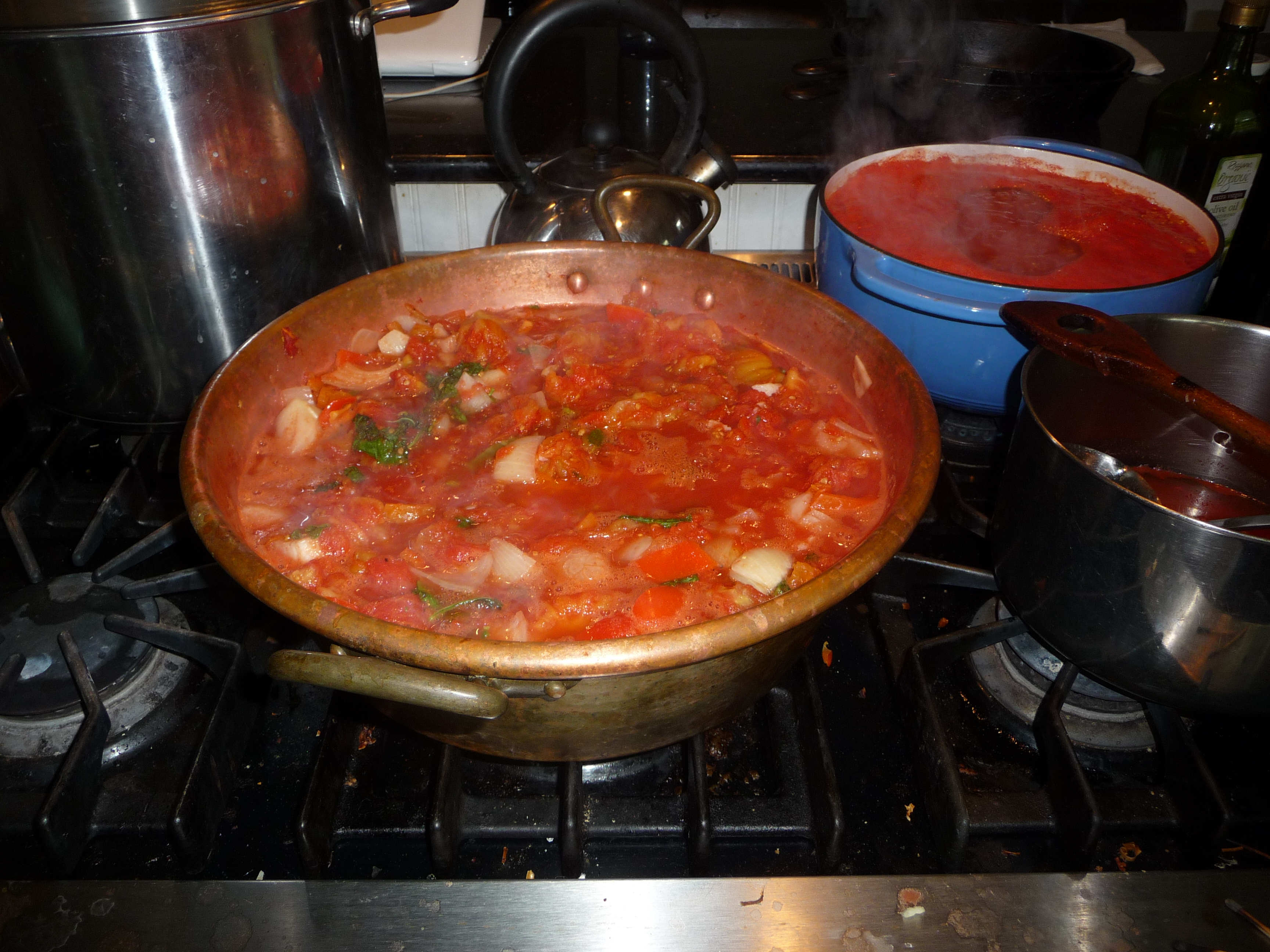
On the upside, Supersauces are delicious and even more meaty than Big Mamas, and once peeled, make great everything, including tomato juice. Canning tomatoes, no matter what you’re making, always produces juice. To keep the jarred tomatoes or sauce from being too running, I put peeled the chopped tomatoes into a bowl, then before putting them raw into sterilized jars, or throwing them into the confiture, a big French kettle designed for making jam in which I make salsa and sauce, I squeeze the fresh juice from them into a bowl. The juice goes into a second pot and is simmer with veggies –a little cabbage, a carrot, sweet pepper, slice of beet, garlic, onion, celery leaves, maybe a hot pepper, and whatever other veg comes to hand [it doesn’t take much]. When the veggies are all limp and they’ve rendered their goodness intot he tomato juice, I strain it, pour it into sterilized jars and process that. It’s all work, but it’s also very satisfying. Especially in the dead of winter.

Roasted Tomatoes for Snacks:
Sliced tomatoes about 1/4 inch thick and lay on a baking sheet with sides so the juice doesn’t run onto the oven. Sprinkle with a little salt, a little olive oil and dot with some fresh garlic then roast in a slow over for about 2 1/2 hours. Cool. Layer in a container. Sprinkle each layer as you go with a little white wine vinegar or white balsamic, cover and keep in the frig for a week or more. For lunch or supper (or a great filling snack) spread a little goat cheese on some toast, lay a few roasted tomatoes on top, hit it with a little grind of black pepper. As Homer Simpson would say: Ummmmmm!
 Nancy Taylor Robson