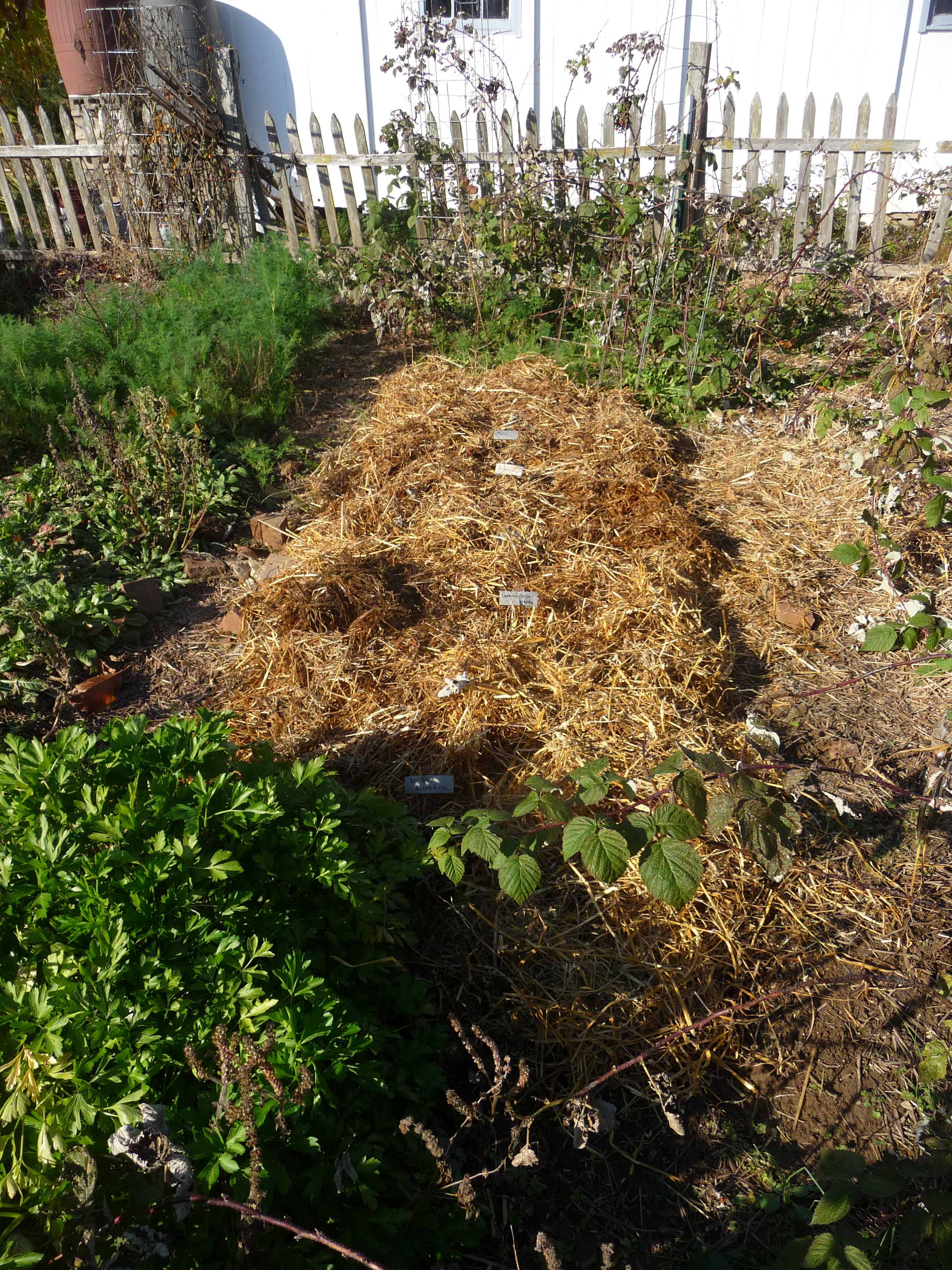
It’s a little late for garlic, planting-wise, but I’m looking at the garden and thinking I may still have a little time to shove in a few more cloves before we reach what is predicted to be a cold January and February. Since I first learned about hardneck garlic from Colchester CSA manager and grower, Theresa Mycek probably nine years ago, and started planting it in my own garden, I’ve come to depend on it. Hardneck garlic is terrific because it’s delicious, beautiful in the garden (those tall green tops with the curlicue scapes are such a nice visual counterpoint to the clumpy greens and beans), and like a culinary Double-mint gum: it’s two, two, two garlics in one.
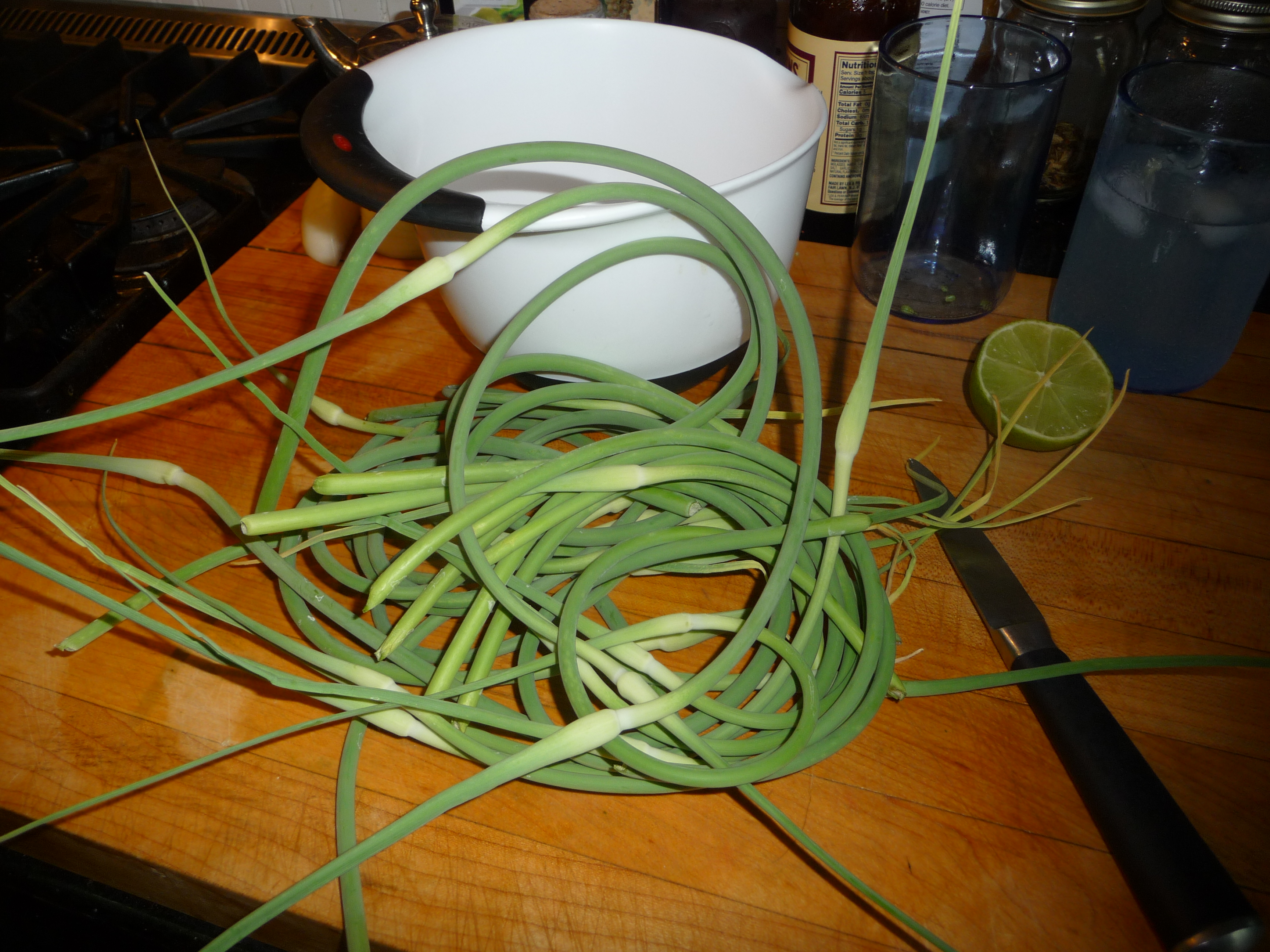
The first one is the scape.
Wait; let me back up a little. First, sometime in late-October through November, you sit outside on a nice autumn day, separate garlic bulbs into cloves and plant the cloves about 8 inches apart – I plant in a grid, others do it in rows. Tuck them in gently beneath straw or some other light but effective mulch. In spring when the earth wakes up, the green shoots start coming through the mulch. In about May, you notice that the shoots have ground rather tall – knee high at least. In maybe mid-June, when the tall stiff central shoots have continued to grow and are now curled around themselves a bit (i.e. turned into true scapes), you clip or break them off – it’s kinda like asparagus; you snap them where they are happy to be snapped – bring them in and cook them any one of a number of ways. We sometimes tempura them, or grill them for a great snack/ hors d’oeuvre/side dish, chop them into omelets, sauté them with other veggies, quick-pickle them in the fridge in a vinegar-and-herb-and-peppercorn bath or hang them by the kitchen door to ward off vampires. Whatever.
In July-ish, when the green tops have browned and died back sufficiently, you dig – or pull, depending on how soft the bed is – the now cloved-up bulbs, wipe off the earth, and hang them up to dry. (I clump them in bunches of about 6-8 bulbs and hang them from the back porch). Then you use them. They go into the spaghetti sauce I can during tomato-and-pepper harvest, into chicken cacciatore (which is ONLY truly delicious when made in season with fresh garlic, fresh basil and fresh parsley plucked only a few minutes before chopping wads into the red-wine-soaked braising liquid), into the oven to roast and then spread on homemade bread with good olive oil, into salad dressings, well, you get the idea. But if you’ve planned right and the fates have shined on you and your little bed of hardneck garlic, you will also have enough to save, separate into cloves and plant to continue the whole cycle. (The miracle of gardening with its wonderful reminder that life works to perpetuate itself).
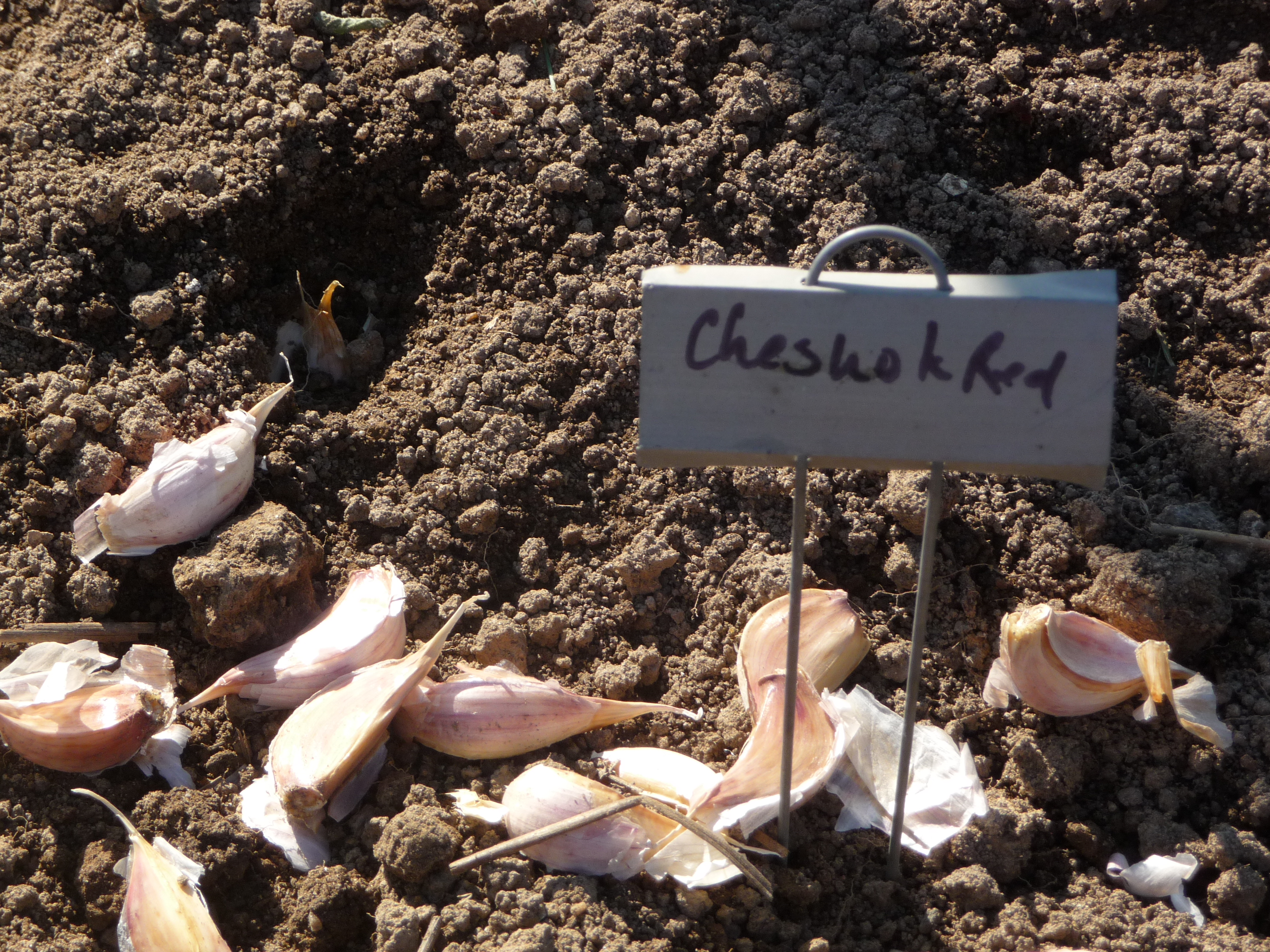
This year, my husband prepped a couple of beds in early November one lovely autumn afternoon while I sat outside, separated the bulbs I had grown and saved for next year’s harvest along with the bulbs I bought from Colchester CSA. (My last summer’s harvest was smaller than I had anticipated. I had more of them rot this past year than usual and so had to buy in seed stock). As I was in prayer position on my knees stuffing the cloves into the ground, I thought about a little garden plaque a friend gave me years ago that said: Who plants a seed beneath the sod and waits to see believes in God. whatever your spiritual convictions, that statement is an acknowledgement that while we can become really good gardeners, we are all at the mercy of so many other elements in life beyond our own control. But I have faith. And I keep on planting.
 Nancy Taylor Robson