
I really didn’t think spring would come this year. But we’ve had a couple of warmish, hopeful days in between storms, just enough of a taste at the tail end of an appalling winter to be able to at least imagine spring up ahead. It’s encouragement enough to start some seeds.
Farmers’ and old gardeners’ wisdom around here says to plant peas and potatoes in the ground on St Patrick’s Day. Not a chance this year. We’ll be lucky to get them in by Easter, I think, unless you’ve got a protected sunny spot that drains really well. I don’t. My garden’s open to whatever the northwest wind can throw at it. And we’ve had plenty of bitter NW wind this year and rain and snow and sleet. But I keep reminding myself: If winter comes, can spring be far behind? (That’s right, Shelley, encourage us!).
Most people direct-seed peas into the ground, but I’ve learned that I can push the season a bit if I plant out pea vines, so one sunny day I seeded a couple of new (to me) varieties of shell peas into flats in my little backyard greenhouse (which is, as I always tell those who struggle with Seasonal Affective Disorder, cheaper than Prozac).
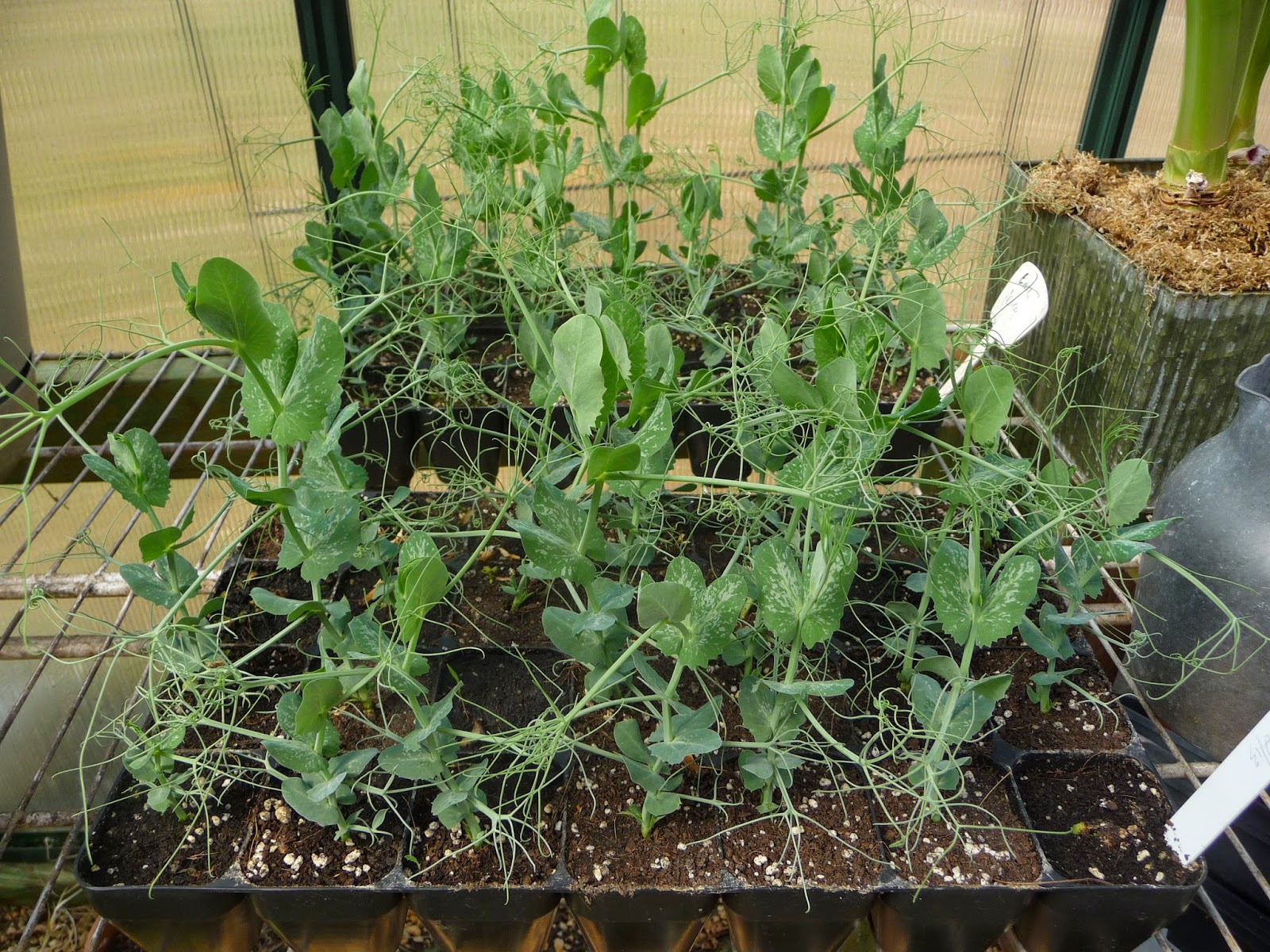
You don’t need a greenhouse, however, to start peas (or anything else for that matter). They would also work under grow lights in a cellar or bright south-facing room. Peas are particularly easy though, because they’re pretty fast and, as early and late-season crops they are geared to less light, so it makes them ideal candidates to start indoors when even the full-spectrum lights can be less than optimal.
The two shell pea varieties I started are: Easy Peasy and Tall Telephone. I got Easy Peasy from Burpee. According to the literature, it won taste tests and is very high yielding – 12 peas per pod as opposed to the usual 6 to 8 and ‘likely to be the best yielder in the garden.’ The vines are bluish and pretty, which is a bonus. The other variety, which I seeded a few days after the Easy Peasy, is Fedco’s Tall Telephone aka Alderman. These are meant to grow 5-6 feet tall, produce well and are heirloom to boot — introduced by pea breeder Thomas Laxton around 1891 and first sold by Burpee in 1901. I only seeded one flat of them. Unfortunately, the germination wasn’t great – about 6 out of the total 24 cells failed to produce anything so I stuck a single pea in each of the empty cells after about a week of waiting past the emergence of their companions. The second seeds are beginning to emerge now.
I use a seed-starting medium from Gardens Alive! And while I’ve tried others, this one seems to work well for me. You damp it before you use it. I stick a portion of the 16-quart bag in a 5-gallon bucket and sprinkle it liberally with water drawn from the rain barrels that sit at the edge of the garage, mix well, as though I were making an extremely dry muffin mix, and then let it sit for a while to moisten the whole thing through. Fill the flats and smooth over the top, poke a pea seed into each cell, smooth it over again and voila! (Well, voila after they germinate).
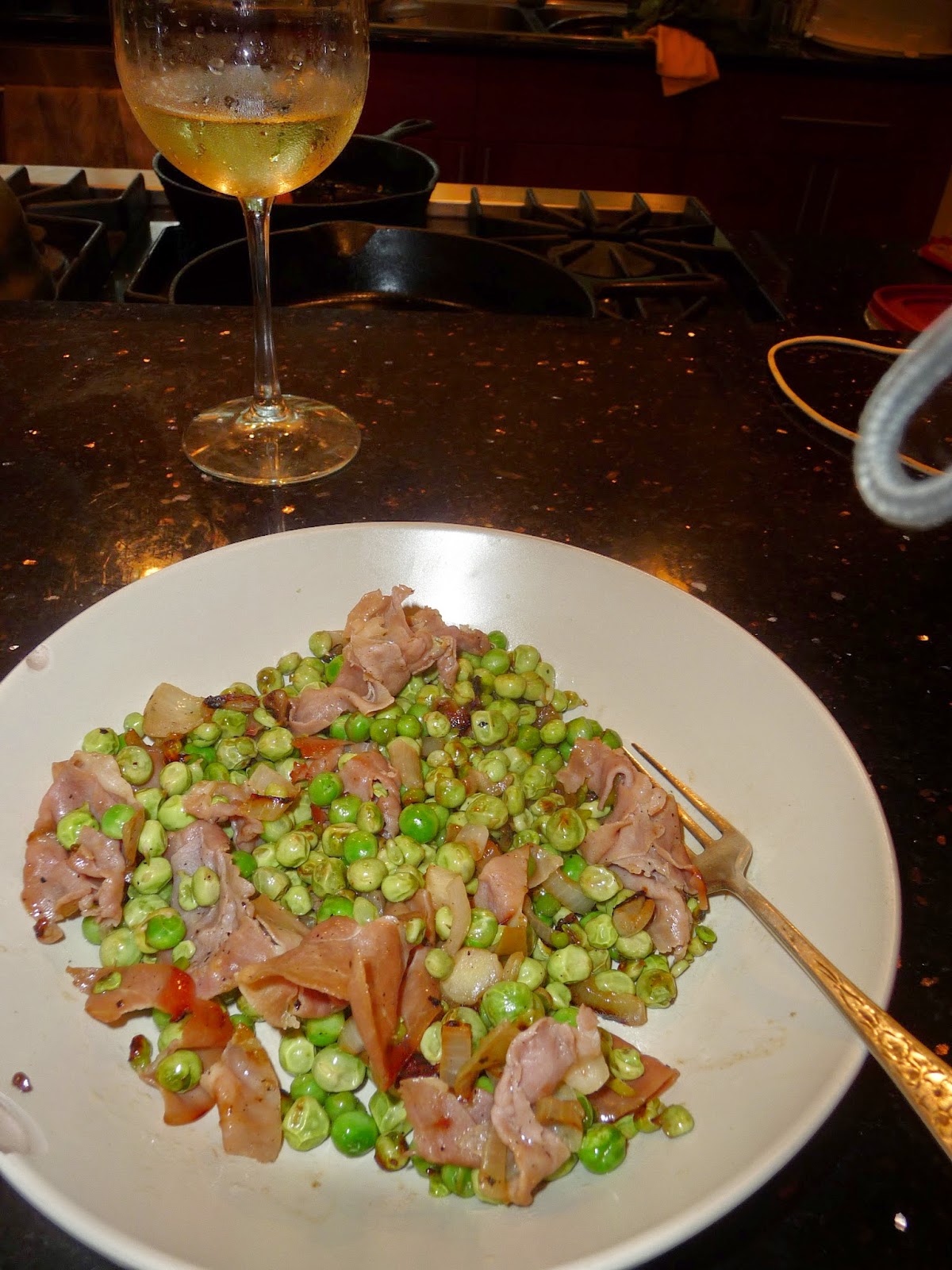
The Easy Peasyes, which are now up about 10 inches, really do need to go in the ground, but the soil isn’t ready. Too wet, and too cold, so I’ll hold ‘em. They are sending out grabby little tendrils and clinging to each other tenaciously, so I gently separate them every day to make it easier to plant them out singly when the weather finally cooperates. It’s like easing the tats out of long hair. Running my fingers gently through them is – for them – a bit like being outdoors in the breeze, which tends to strengthen the vines. And they smell deliciously pea-like. These are not the only peas I will grow this year. Mammoth Melting Snow, Sugar Anne Snap, Oregon Giant Snow and Masterpiece peas, which are bred for their foliage and are supposed to be ready to clip in a month, will all get direct-seeded once I can get into the garden. But I start some inside because I love having them as early as I can possibly get them – sautéed fresh from the garden with shallots and a little prosciutto OMG!
Peas are one of the coolest-weather crops, but you still don’t want to put ‘em into the ground until the soil temp has reached about 45F. Otherwise, they’ll simply rot. Also, especially after a winter like the one we’ve had, the critters will be on the lookout for anything to eat, so if you’re planting out your pea seeds in another week or two or three, you might want to throw some row cover over them to keep the birds from plucking the seeds right out of the ground. Crows especially can discern patterns. And, you might want to leave that row cover on until the vines start to blossom to keep the rabbits from eating them down to nubbins. At least that’s been my experience. Once they’re big enough to blossom, they’re also usually tougher, higher than the rabbits reach and there is other stuff for them to savage.

Meanwhile, the snow’s melting and I’ve seeded the tomatoes and peppers into another flat. The tomatoes are JUST starting to poke through. I guess eventually we ARE gonna have spring (at least I’m counting on it), and if we have spring, can summer be far behind?
 Nancy Taylor Robson
Nancy, The Galesville Heritage Society, Galesville MD, is looking for a speaker for a quarterly members dinner meeting. Do you do things like that?
Julie W
I do, Julie. Let me know what you have in mind and we can talk. You can reach me via email:
editor@headtowindpublishing.com