A Bean By Any Other Name

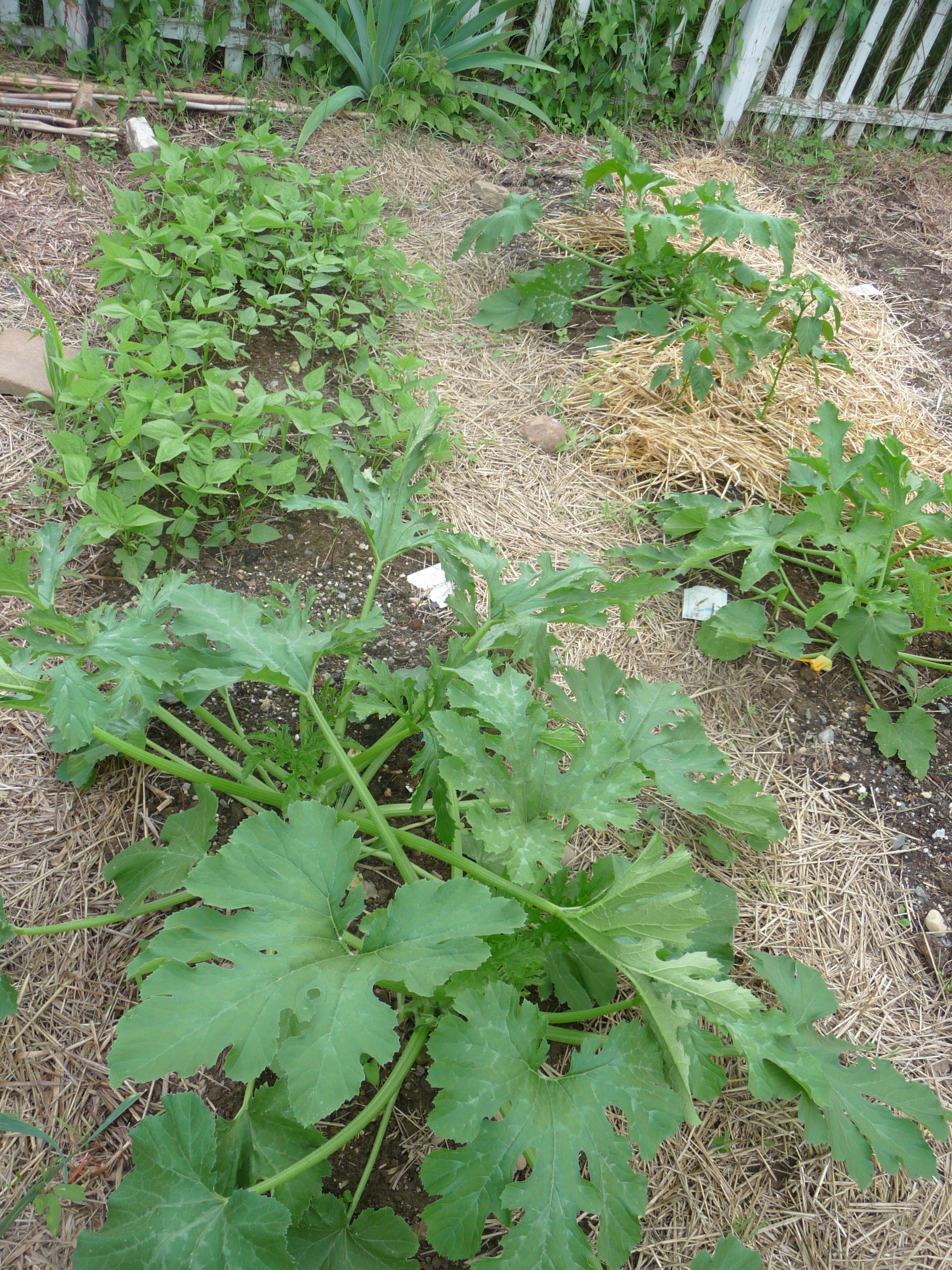
Bean plants before the zukes grew, produced and collapsed

Our beans have begun to come in – a great blessing, in my books, because I love French green beans, those slim little things that look like they were cradle-robbed from the plant. I’ve planted loads of beans over the years – bush, climbing, semi-climbing (which means they reach about 2 feet tall and need some help unless you don’t mind them sprawling all over their neighboring veggie plants), Providers, Blue Lake, Kentucky Blue, Romanos, Burgundy, Scarlet Runners, Asparagus beans (which, frankly, I don’t like), Sunset Runners, Jacobs cattle, Tiger’s Eye and Yin/Yang (the last three are shell  beans, i.e. drying beans, and they’re delicious). Among others. I’ve spent years searching for what I consider to be THE best French green bean aka Haricot Vert. I thought I had it when I found Cook’s Garden Seeds’ French green beans (bush) but didn’t find them there this year. Instead, I got Burpee’s French Filet bean, which, since Burpee bought Cook’s a while back, is probably the same bean. A reliable producer, the slim, tender beans stay slim and tender for several days, even if you miss a day’s picking. And they stay fresh for days in the frig when stuffed dry into a plastic bag and kept in the crisper.
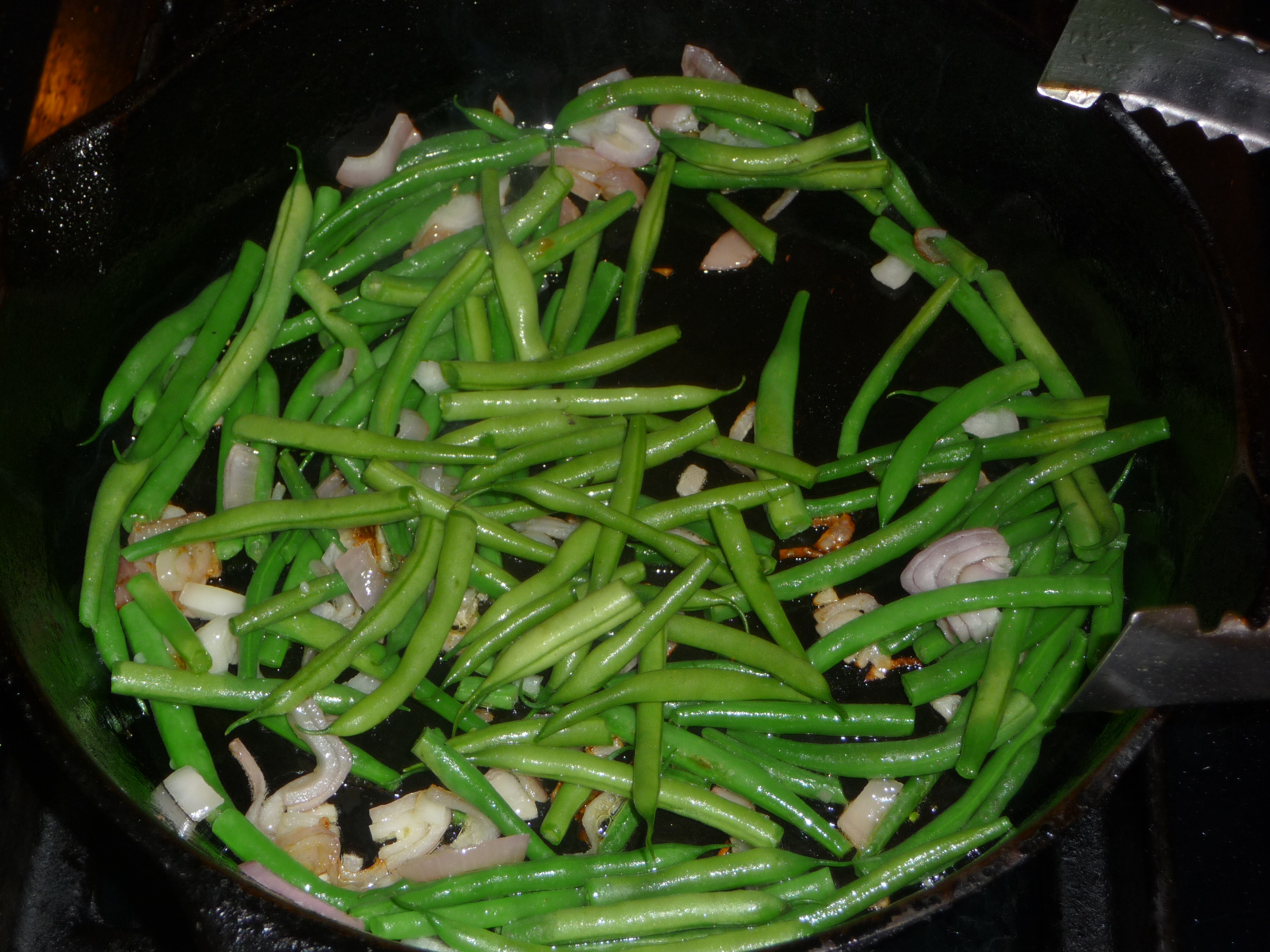
Haricots Verts sauteed with shallots and garlic

 They’re  so delicious done in a host of different ways. The very first handful get eaten right in the garden, because usually I’m out there with the dog before breakfast and I’m hungry, so I forage. Right after that, I bring in the first picked batch and steam them for lunch. I chuck in a little sliced onion and mix up a little dressing of half olive oil mayo and half horseradish. Yummy.  For supper, I throw them into a frying pan shimmering with a skim of olive oil and sauté them with a sliced shallot, some halved cherry tomatoes (which are also coming in nicely right now, though the early blight’s gettin’ to ‘em), a smashed and chopped clove of fresh hardneck garlic, some fresh oregano or Cuban basil or both, and salt and pepper. Delicious with any kind of meat. If you’re cooking fish, you can just throw the fish in on top of this veggie concoction when it’s half-cooked, splash in a little white wine and you’ve got dinner in about 15 minutes.

After we’ve eaten beans those three ways, I go on to hunt for new recipes — or at least creatively (and deliciously of course) try to use up what other potential ingredients I have hanging around in the frig. The other day, I had some leftover slices of prosciutto that I chopped threw into the frying pan along with the beans, tomatoes, shallot and basil. Sort of on the order of old-fashioned beans stewed with a ham hock, but crisper, quicker, healthier (I’m assuming) and MUCH better tasting.
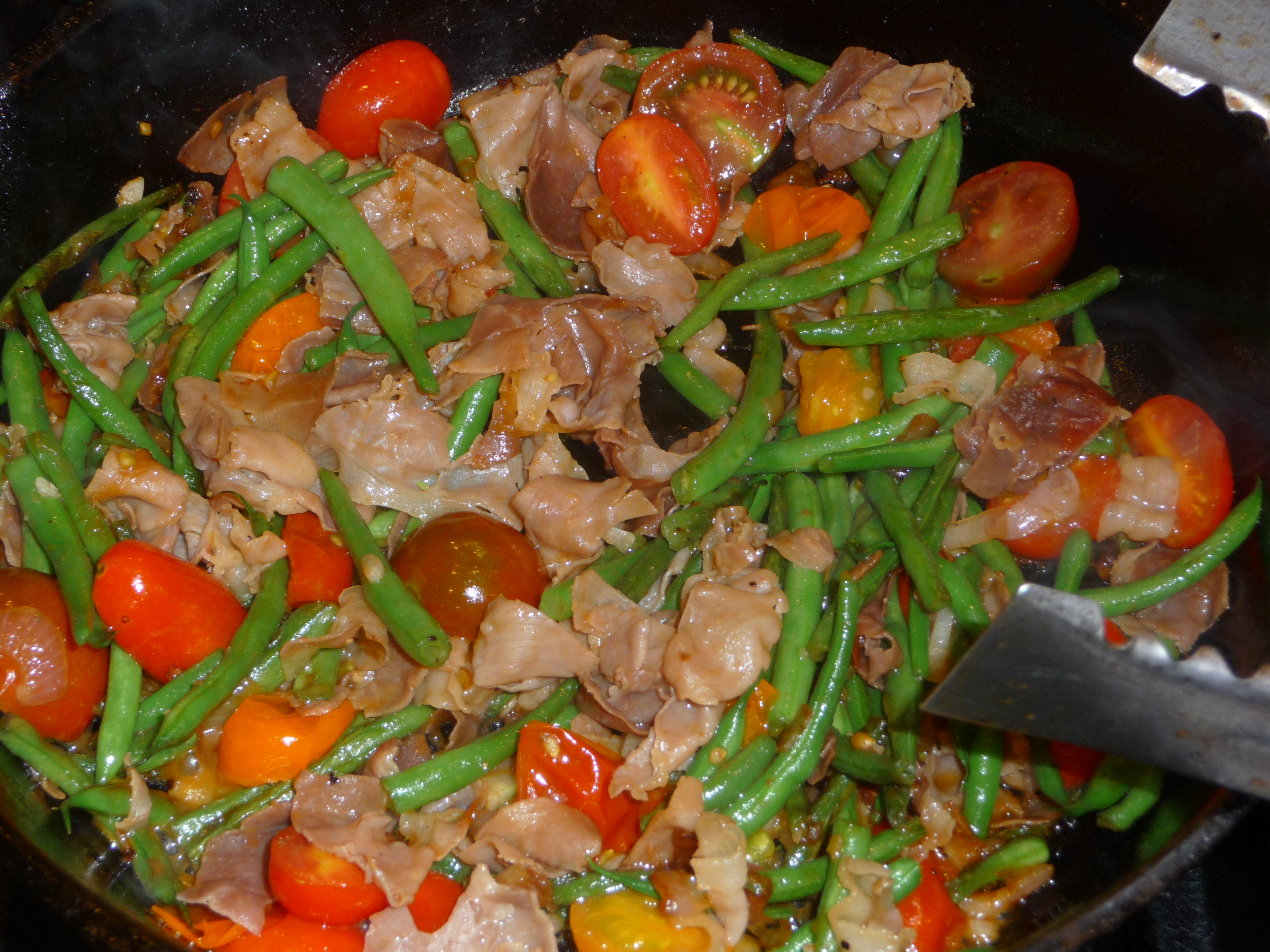
Haricots Verts with cherry tomatoes and prosciutto

This year I got smart and ordered a double batch of bean seeds and plan to get a second batch planted within the next week or so. The bush beans are usually ready ot pick at about 55 days or so — longer  more if you plant them now, but still,  they’ll produce beans for fall, with some leftover for the freezer. Winter vegetable soups. Haricots verts, French filet beans, green snaps, it doesn’t really matter what you call them. A bean by any other name still tastes just as good.
Tomatoes and Rhubarb and Squashes, Oh My!

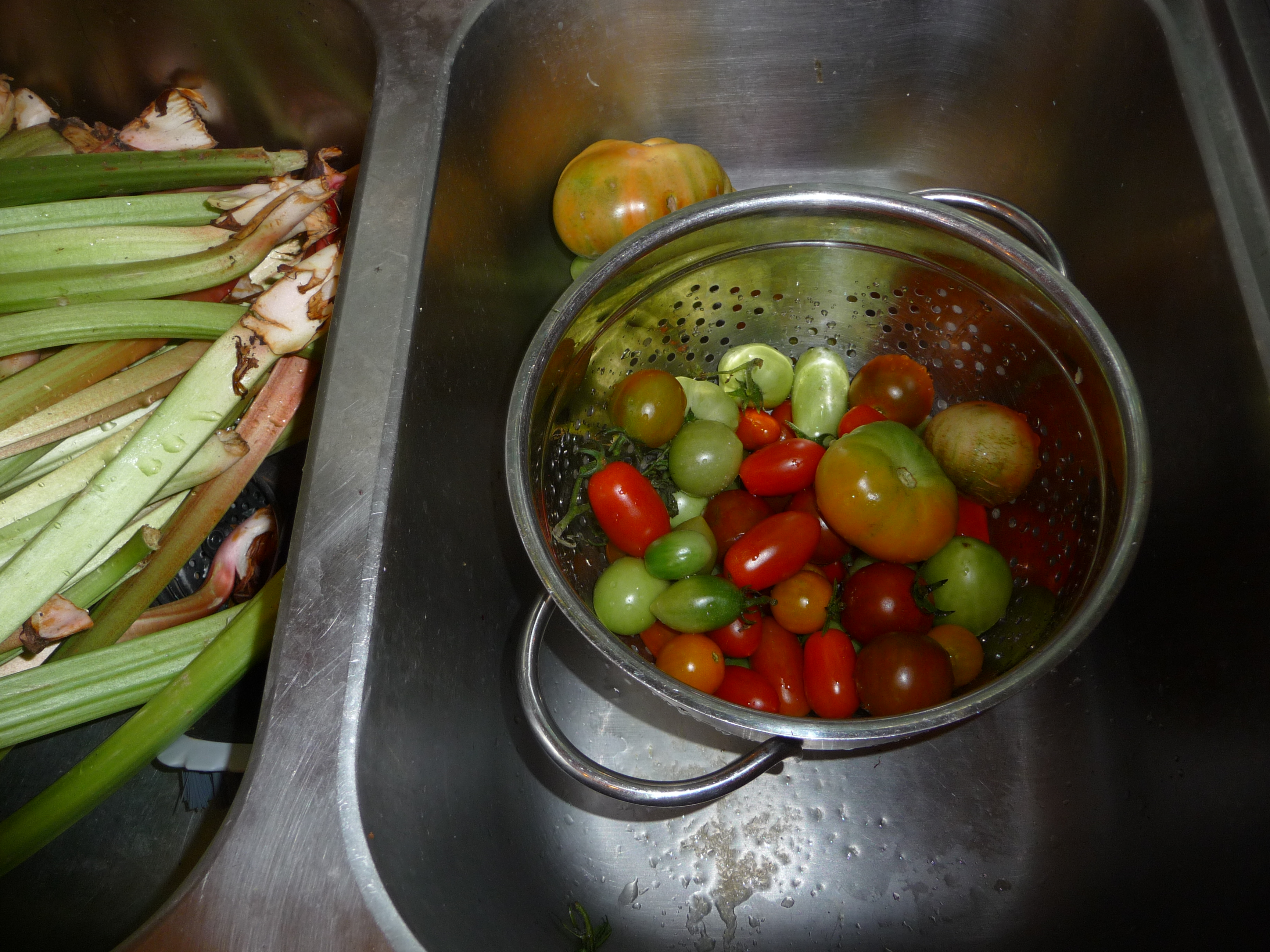
Cherry tomatoes and rhubarb in sink
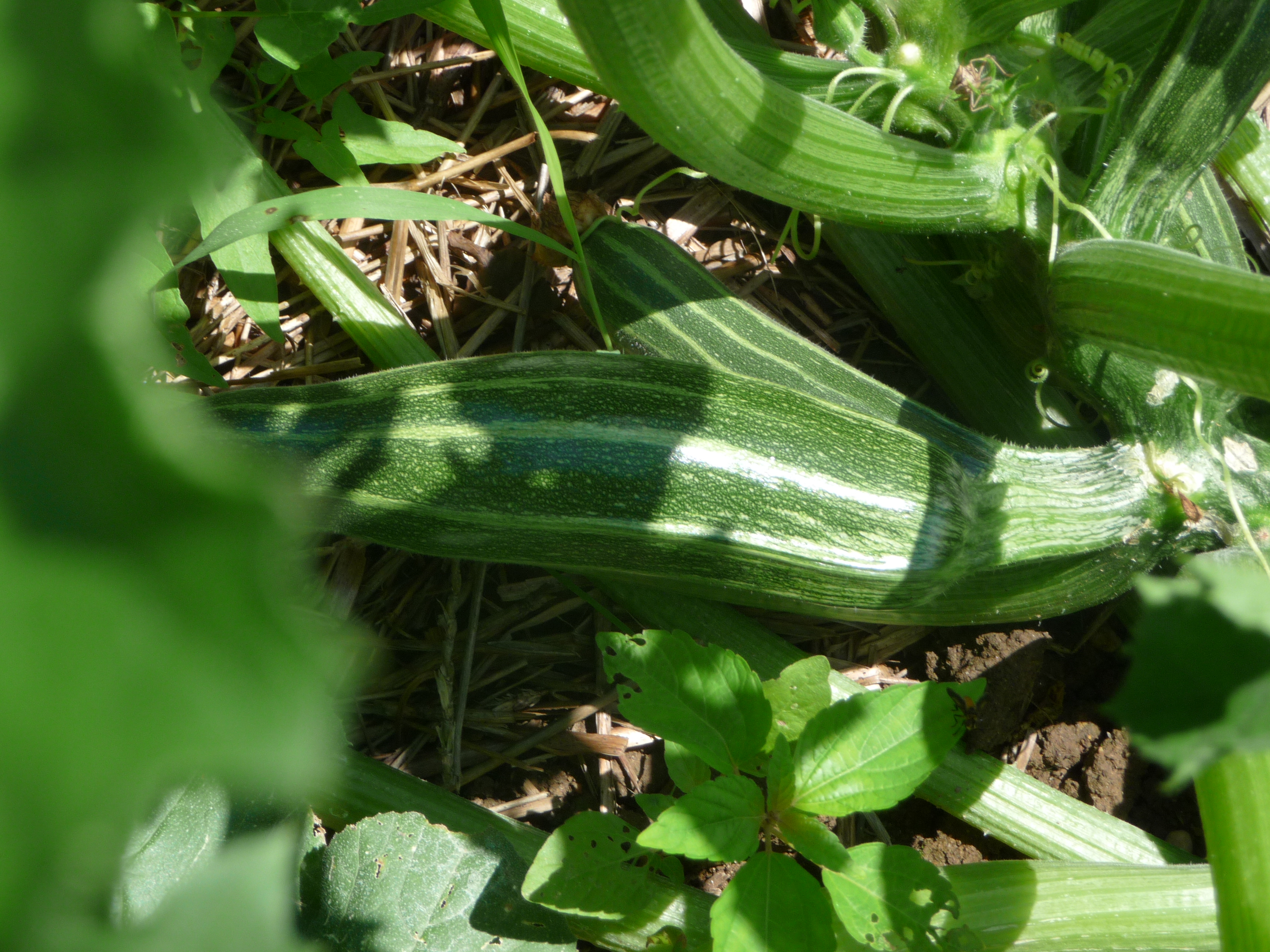
Gadzukes zucchini in garden

And so it begins. Every year I look forward to the garden producing fresh vegetables. Every year, I plan, prep, plant, and – most years and this one is no exception – get overwhelmed. Production and problems and pests, oh well. Even so, being able to walk out back and pick –ingredients for supper, radishes and cukes to slice for quick frig pickles for snacks with toast, cherry tomatoes for Greek salads or chopped salads with olives and a little hot pepper, fresh herbs, fresh hardneck garlic, chard, spinach, and more makes the obstacles well worth it.

 This week the squash has started coming in — along with the rhubarb and a few cherry tomatoes and a coupla cukes and a Big Daddy pepper or two and the last of the glorious harvest of fresh shell peas, though I still have hopes for the second planting, so we’ll see. But I digress.
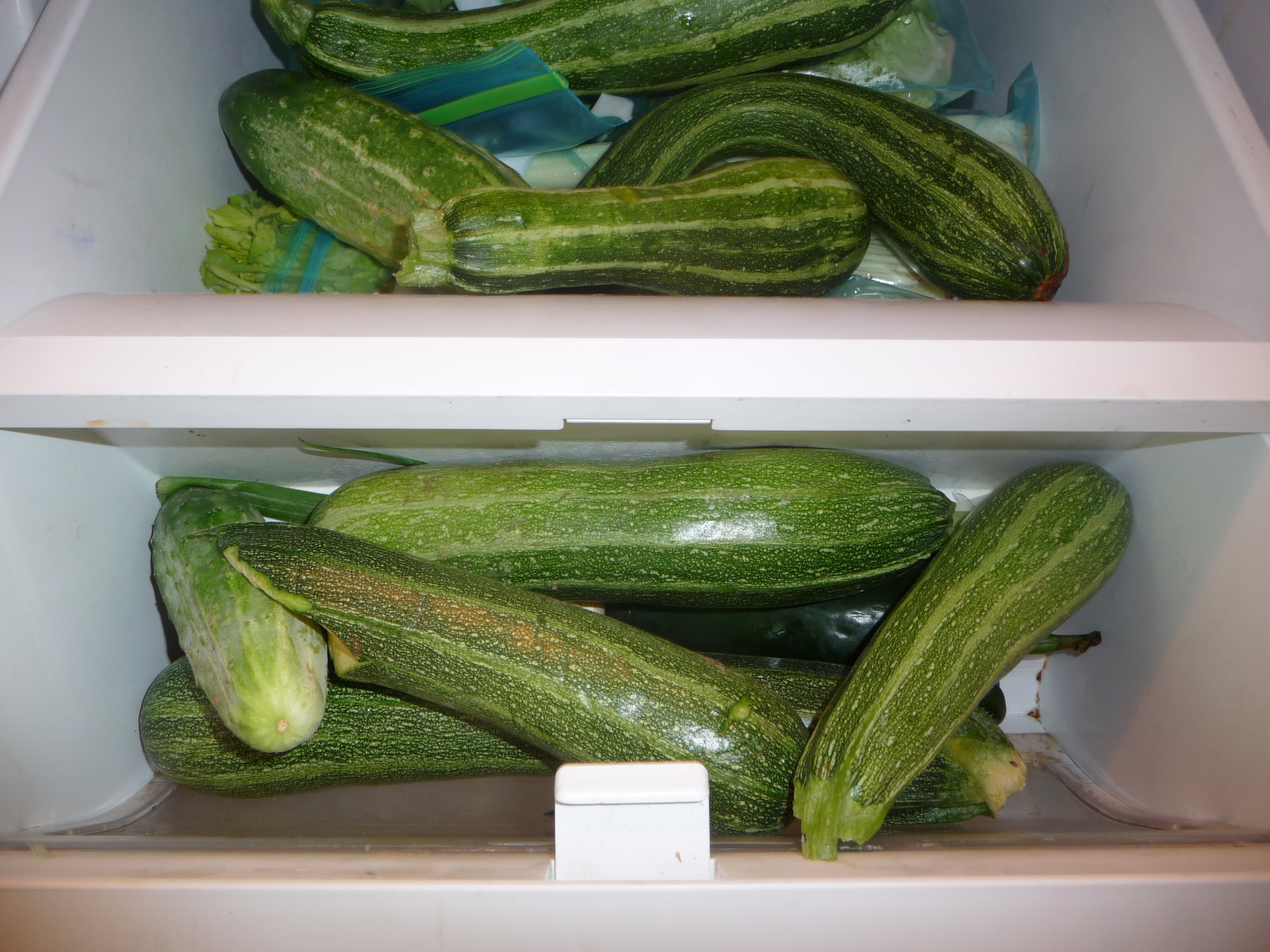
Happiness is a full crisper
 

 The squash. Zucchini fritters with spicy adobo sauce or quick sautéed for supper with onions and salt and pepper, or ratatouille or grilled or sliced and layered with pasta and tomatoes, browned ground beef, some Worcestershire, herbs and whatever cheese you have leftover in the frig (and baked, obviously). But the thing I look forward to having every year now is an ab fab squash gratin that we first tried two summers ago and fell in love with. It’s a wonderful concoction of homemade pesto wrapped around sliced squash, shallots homemade breadcrumbs and layered with gruyere.  Each component makes the whole thing special, but the standout ingredient from my standpoint is the pesto. In addition to the usual garlic, herbs and olive oil, it includes capers and anchovies for umami (pronounced Oooooo Mommy!) that depth of flavor that makes a dish truly satisfying. The result is rich, flavorful and filling. A whole meal until itself. It’s even good leftover and cold for lunch.

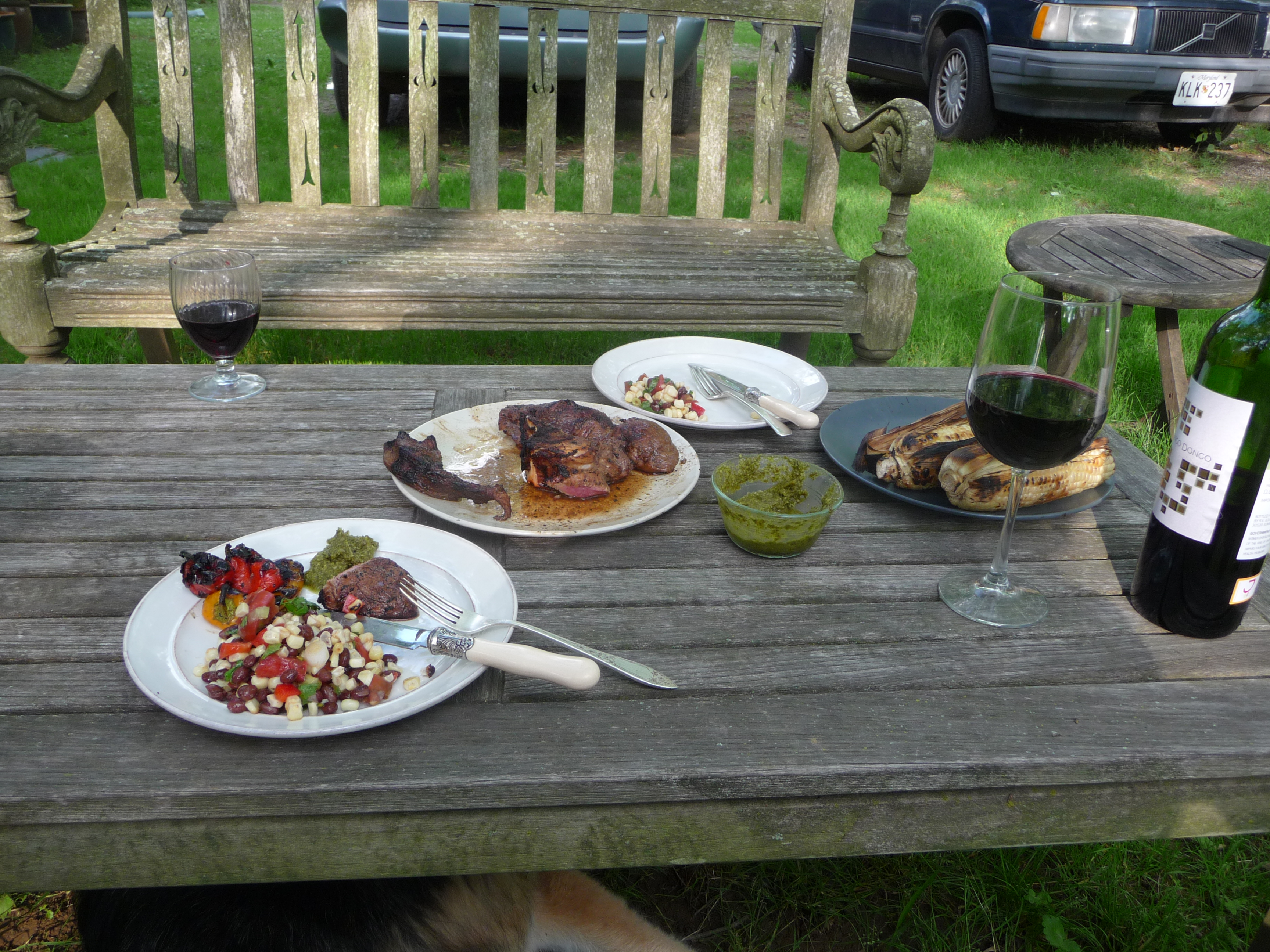
Casual dining with fresh, organic, locally farm-raised

The recipe prescribes specific quantities of fresh herbs, which I don’t always have so I substitute. Cilantro to make up for my garden’s low inventory of parsley, for example, and more oregano, and a fistful of basil. I use wholegrain breadcrumbs made from some of the leftover crusts I stick in the freezer. Also, there is rather a lot of olive oil prescribed, at least for our tastes, so I cut it in half, which works for us.

I don’t have a picture of that casserole (again, we ate it all before I even thought of pictures) so I’ve included other stuff to keep eyes entertained. Recipe link below. Eat hearty.


p.s. just added the pics of a meal since I remembred to take ’em. Local grass fed Jersey steak, chimichuri from our cilantro and hardneck garlic, and grilled sweet peppers along with black bean and grilled corn salad. By way of apology for not staying on target with pics of the food I’m talking about!

First raspberry tart of the season

Protect Your Garden

Protect Your Garden: Eco-Friendly Solutions for Healthy Plants by Ed Rosenthal is a great book for young gardeners and young-in-experience gardeners, but it’s also one more experienced gardeners will occasionally take into the garden, too.

Ed Rosenthal's book coverIt’s very well organized, helped tremendously for those looking for a quick answer to a specific problem by the color-coded page edges. Want to look up those clustered bronzy seed-like eggs on the underside of the squash leaves? Brick-edged Pests pages are your section. Want to know why your perfectly watered tomato leaves are curling up as though trying to retain moisture?  The green-edged Diseases and Nutrients section may point you to copper deficiency. Caramel pages contain the environmental stresses section while the burgundy pages offer time-tested methods of control.

The bibliography spans six pages followed by several pages of what Rosenthal dubs ‘sources,’ which are actually full-page ads. (Gotta admire the commercial enterprise involved).

 I like this book for several reasons: The pictures are terrific close-ups and a helpful size for easier identification of pests, diseases, whatever while holding the book right next to the problem. They also offer at least two stages of a pest’s life, so you can not only definitively identify that thing that’s crawling out of the cuke or squash stalk, you can go to the Exclusion and Prevention list on the same page to see if there’s something you could do NOW, like trap them with the color yellow, or allspice, clove or bay oil, Neem oil, Pyrethrum or Spinosad, and what beneficial(s) you could bring to bear — assassin bugs, those fascinating fire-engine red dune buggies-like insects, tachinid flies, and/or parasitoid  wasps for example.

Some of the pests and pictures are not really necessary – the gopher strikes me as superfluous, but whatever.  I appreciate the focus on the ecological approach, and like the front cover of a dad teaching his son in a hands-on way to prune what might be a blight-ravaged leaf off a tomato plant. Get kids in the garden as early as possible is my motto. My kids bellowed mightily for years about it, but one now gardens assiduously, and both eat organically and cook, so I must have done something right.

 Ed Rosenthal’s Protect You Garden: Eco-Friendly Solutions for Healthy Plants (Quick American Publishing, 2013, $24.95).

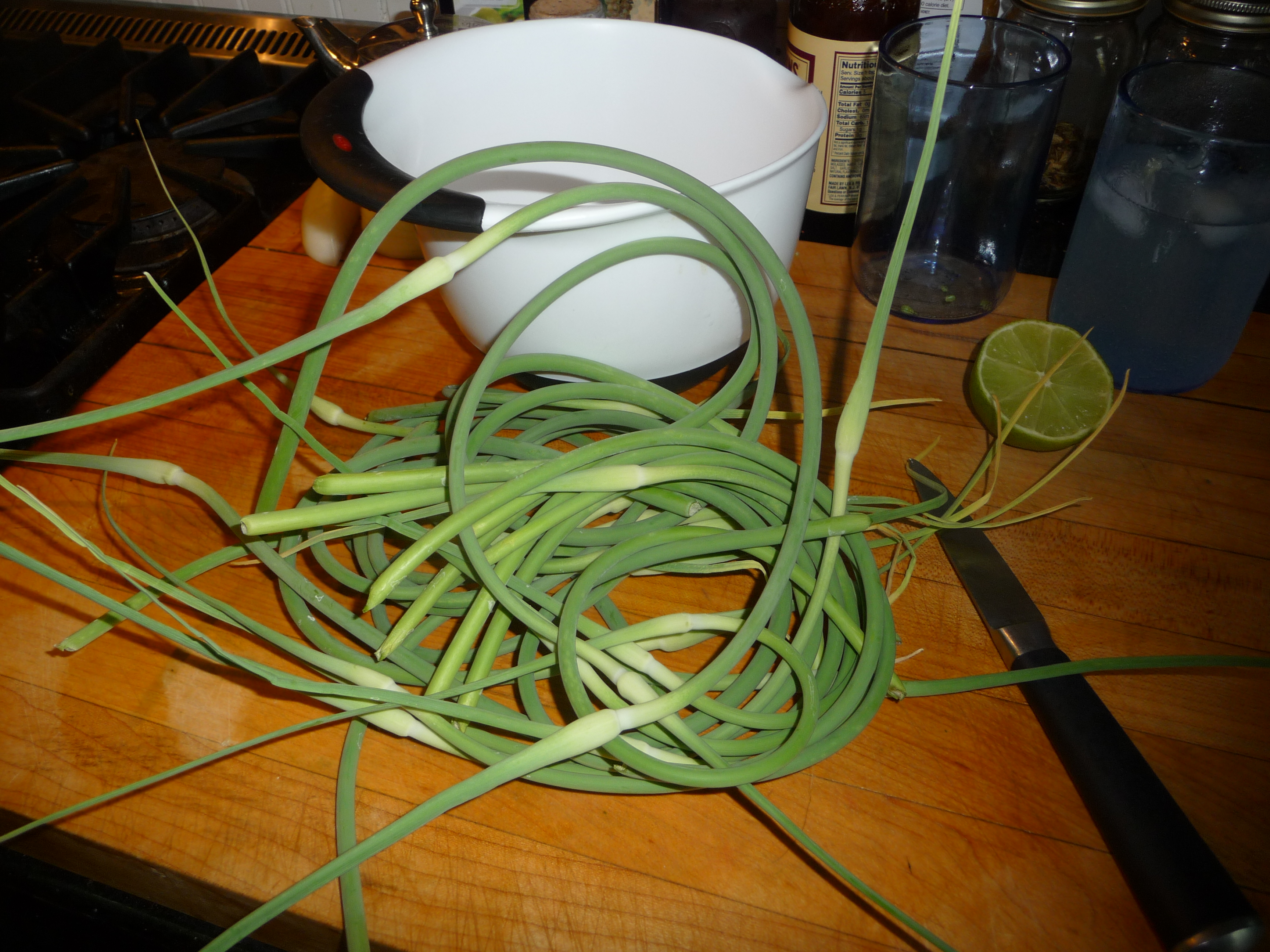
Got Garlic Scapes?

Scapes before clipping off arrowhead tip

I just noticed them a few days ago – they kinda hide in all the leaves that the hardneck garlic has sent up over the last two months. But then I caught sight of one of those green, downward curling stems with its barely-yellow arrow-pointed head and realized: It’s time to cut the garlic scapes.


Scapes in tempura batter
Scapes in tempura 


In addition to the cluster of green leaves of virtually all garlic types, hardneck garlic has a bonus that the softneck varieties don’t. Scapes. The scape is the curling green top of the central stem, which is the hard neck. The scape is beautifully edible if you get it before the arrowhead at the tip swells. Left alone, the tip of the scape grows tough and reedy and produces a cluster of tiny little bulbils like teeny onions that can, if planted, eventually become new garlic bulbs in two years, but that project also draws energy off the task at hand: growing big juicy garlic bulbs below.  Plus, if you clip off the scape early (as I did last week), at the point of the plant where it just begins to curl, it’s green and crisp, and you can cook it in a variety of ways.  Win-win.

Scapes, peppers and carrots frying


The scape imparts a garlic-y flavor that’s a lovely addition to omelets, soups or stews. Oil each a little and  stick ’em on the grill for a few minutes as we did a few nights ago (I forgot to photo, sorry), or tempura the thing for an hors d’oeuvre. (THAT, I remembered to photo along with the gin and tonics we had with them). Life is good.


TEMPURA:


Batter:

About a cup of flour, a little salt and enough soda water to make it a slurry about the consistency of crepe batter.  I also sometimes use beer for the liquid instead of soda, which adds flavor (the alcohol burns off). 


Clip off the arrowhead tip, which is reedy, then cut the scapes in half for easier handling. Pour about an inch and a half of oil into an iron pan, an electric fryer or whatever else you have. The oil needs to be 375F as measured on a candy thermometer. If you haven’t got one of those, wait until the oil is very hot before putting several dipped scapes into the oil.* They only take a couple of minutes to cook. Drain them on paper towels.  Munch. My husband, Gary, who loves fried stuff as much as I do, cut up some carrots and a pepper to tempura as well. Yum yum yum.

Tempura'd veggies
Tempura’d veggies


*Be very careful; the oil can spit, and if you have ANY water on your hands that drops into the pan, it can splatter.  (Aloe plants in the kitchen are a help). 


Book Review of Gardening for Geeks

Gardening for Geeks by Christy Wilhelmi packs a big punch of great practical organic information, ideas, projects, and philosophy into a lot of small, easily digestible pieces. Bright and informative without being preachy, the book includes a huge range of stuff in a relatively small space.  It runs the gamut from how to create a sustainable ecology to

Gardening for Geeks covermaterials, gadgets, fertilizers, native plants, pollinators, making a worm bin, a bee box, raised beds, storing saved seeds, vertical gardening, building soil, using either a compass or the internet to decide how to situate your garden, canning and water catchment, among other things.  (PHEW!) It also touches on French Intensive, bio-intensive and square-foot gardening, (each of which have had whole books written about them) — all distilled into straightforward prose. The first chapter focuses on what (habitats, for example), why (because you need a balance of all the creatures that make the whole system – food for you, food for pollinators, food for pests, which are food for pollinators and other beneficial creatures in the garden – it’s a complete circle) and how you achieve it.  The last chapter includes some recipes followed by an appendix with a few seed sources.

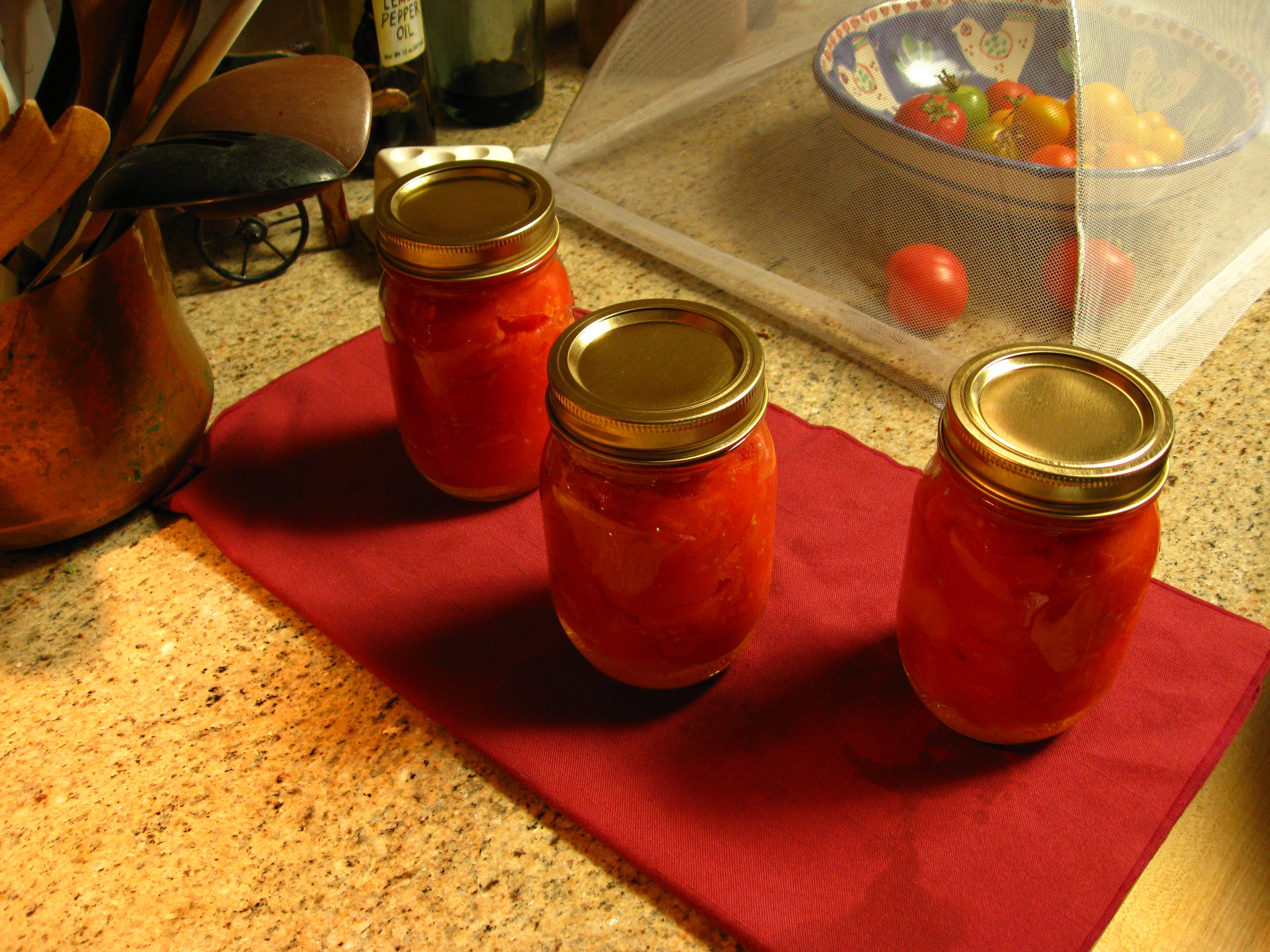
 Gardening for Geeks offers succinct reasons why you would do something (create compost, check to see if the redwood you plan to use to make raised beds has been chemically treated or kiln-dried, for example) – keeping in mind the average person, who doesn’t have the luxury of turning growing some food from part-time pleasure into a fulltime job (even if they wanted to). IMG_0513 - canning tomatoes

The format is visually appealing and well organized with plenty of illustrations both photo and drawing, and includes great little break-out tips that catch your eye as you flip through.  This is a book you could give to inspire a novice gardener without making them feel overwhelmed, to your favorite gardening friend without insulting them, since there is bound to be something inside that even he or she hasn’t come across or imaged yet, or to yourself since it’s like the crib sheet to a host of gardening courses. Gardening for Geeks by Christy Wilhelmi (Adams Media, $15.95).

Pushing the Season – Protecting The Tomatoes

Tomatoes in Walls o' Water
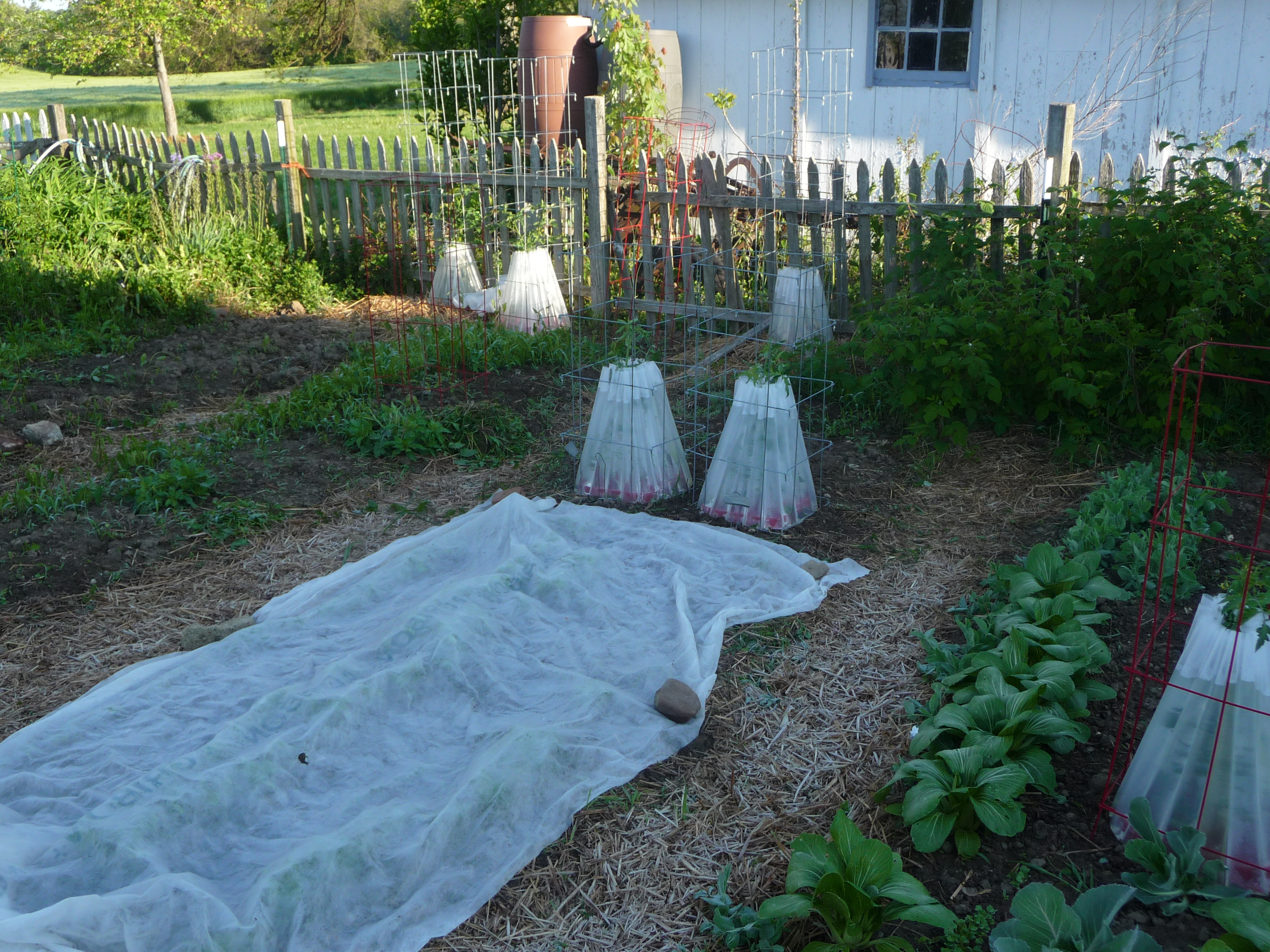
Tomatoes in Walls o’ Water

 It was 36F when I got up yesterday morning, close though not actually freezing, but last night, we had a definite frost. And I have ten tomato plants that I started from see already stuck in the garden.  

I never seem to time it right – some years, I’m way early, some years way late starting my tomatoes. I like to push the season — having your own tomatoes by 4th of  July is an undeclared but fierce competition over here in the upper Eastern Shore’s farm country. But the increasingly unpredictable seasons have made the calculation about when you start seeds and when you can actually put plants in the ground more complicated. Normally, our last frost date here is about April 15 or so. Clearly, we’re in a new normal, hard enough for gardeners, but the farmers and the CSA growers, who plant out in the fields, have it way harder; with our smaller scale, gardeners can do all kinds of things to protect our tender plants even if we’ve miscalculated the timing or if the season’s unkind.  To help deal with the vagaries of climate change, ingenious gardeners and commercial enterprises have developed a host of strategies to cope. Like Walls o’ Water (a trademark, though I think there are similar kinds of things now with different names).

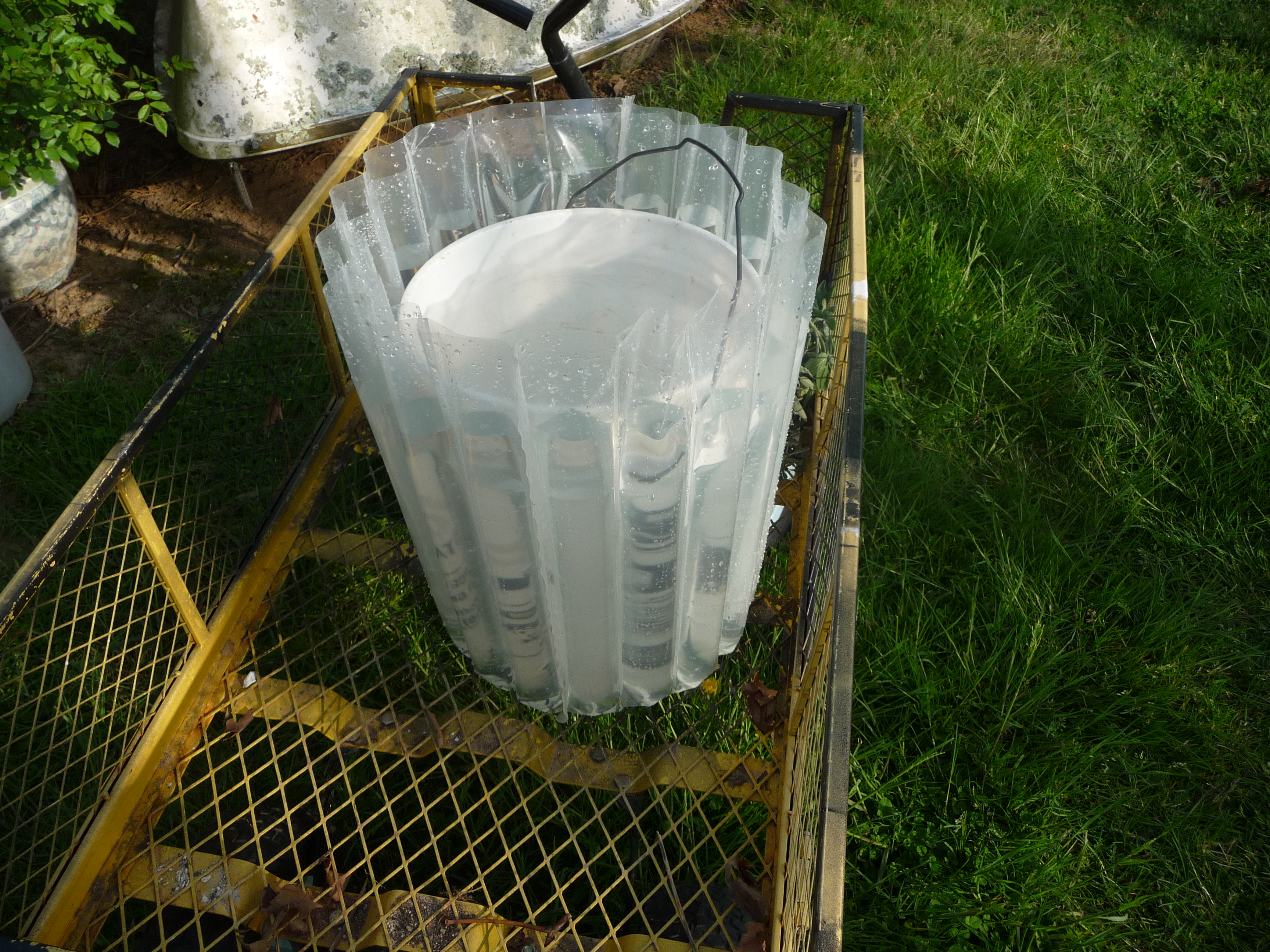
Filled Wall of Water ringing 5-gallon bucket


My tomato plants were desperate to get into the ground, but I knew — thank you Marty Bass — that we were potentially in line for a frost on Monday, last night and tomorrow. So, while the soil thermometer indicated that the soil was borderline-OK to plant some of my overgrown Solanaceae babies, the air temps were iffy. So, bit by bit over several days, my husband cleared some beds (bless his heart) and I planted ten tomatoes — Big Mama, Supersauce, Big Rainbow, Renee’s Mandarin, Sungold, Green Envy, grape, Sunchocula, Gold Medal and Super Beefsteak — inside Walls o’ Water.


Tomato in Wall in the midst of greens

Walls o’ Water are clever little season-extenders (actually more like season-precursors since you use them at the beginning not the end of the season). They’re translucent plastic cuffs about 15 inches tall, ringed with vertical channels that you fill with water. Once filled and in place around a plant, they absorb the sun’s warmth and retain enough of it overnight to protect against nights like the past two. They can be a bit awkward to deal with when you’re filling the channels and then lifting them into place, but they work well once installed. To make filling and moving them easier, I put an empty Wall o’ Water around an empty 5-gallon bucket, which acts as a stiffener, then fill each channel with the hose. Once filled, it’s easy to lift the filled wall, still ringing the bucket, into a garden cart and haul it out to the garden. However, lifting it into place over the planted tomato plant is a little tricky (two sets of hands help – again, thanks, Sweetheart). Once the Walls o’ Water were in place, I put metal cages over the whole rig, which also helps to keep everything in place when the wind’s blowing 40 as it was the other night. Spent yesterday evening weeding the tiny spinach, carrots, and radishes as well as the space around the tomatoes; everything was still thriving. So far so good. Most of them have about six inches of top sticking out of the plastic protections, o we’ll see as the day wears on whether last night was too much for their bare little arms. If so, I’ll clip off the frost-burnt bits and keep going. Tomatoes can be amazingly resilient if you give them a little encouragement.

Tomatoes inside Walls o' Water after a night's frost
Tomatoes inside Walls o’ Water after a night’s frost


More tender plants will go in next week when the weather (presumably) settles down some. Can’t wait to bring in the first tomatoes in town!

Tomato sticking out of top of Wall o Water


Pak Choi in the Pan

This time last year, we had been eating pak choi and kale out of the garden for several weeks. I had started it in little cells in the greenhouse and planted it in the garden in early-mid March. This is one of the beauties of blogging; I’ve got records and pictures so I know I’m not exaggerating.

Washed pak choi
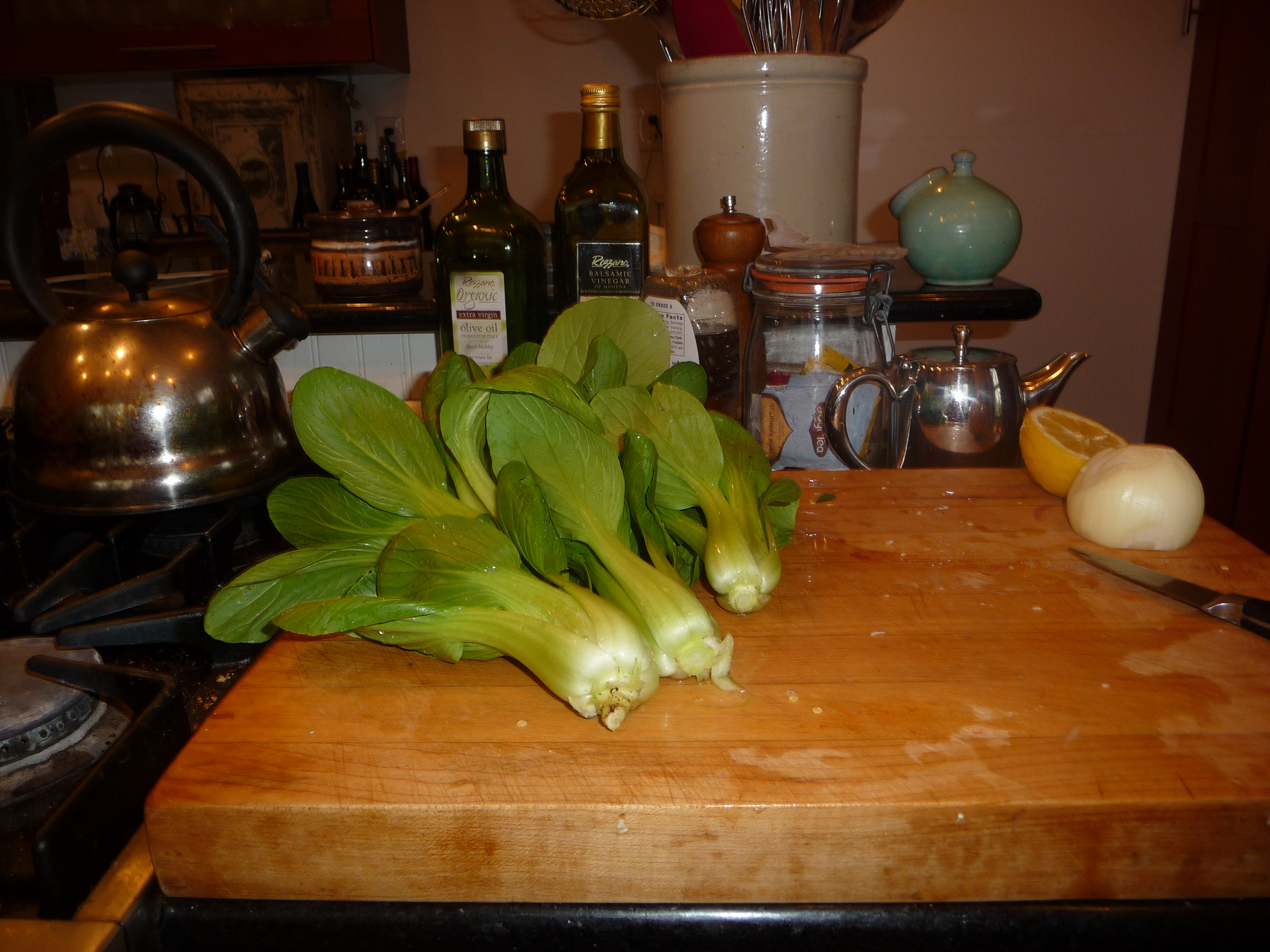
Washed pak choi
 This year, there was no way. I tried. I planted a bunch of the pak choi seedlings I had started from last year’s seed* in one of the few garden beds I have so far managed to prep this chilly grey spring. The soil thermometer registered 50 degrees when they went in and has since gone up to 60+, but it’s been very slow growing. Meanwhile, seeing the meteorological writing on the wall, I had stuck some of those same seedlings with about ten kale seedlings in a long plastic trough planter that I’ve been hauling in and out of the greenhouse on bright days. It’s been living outside for the past week or more. The stuff in the trough is about two and a half times the size of what’s in the garden. Last night, I cut the first batch of planter pak choi.

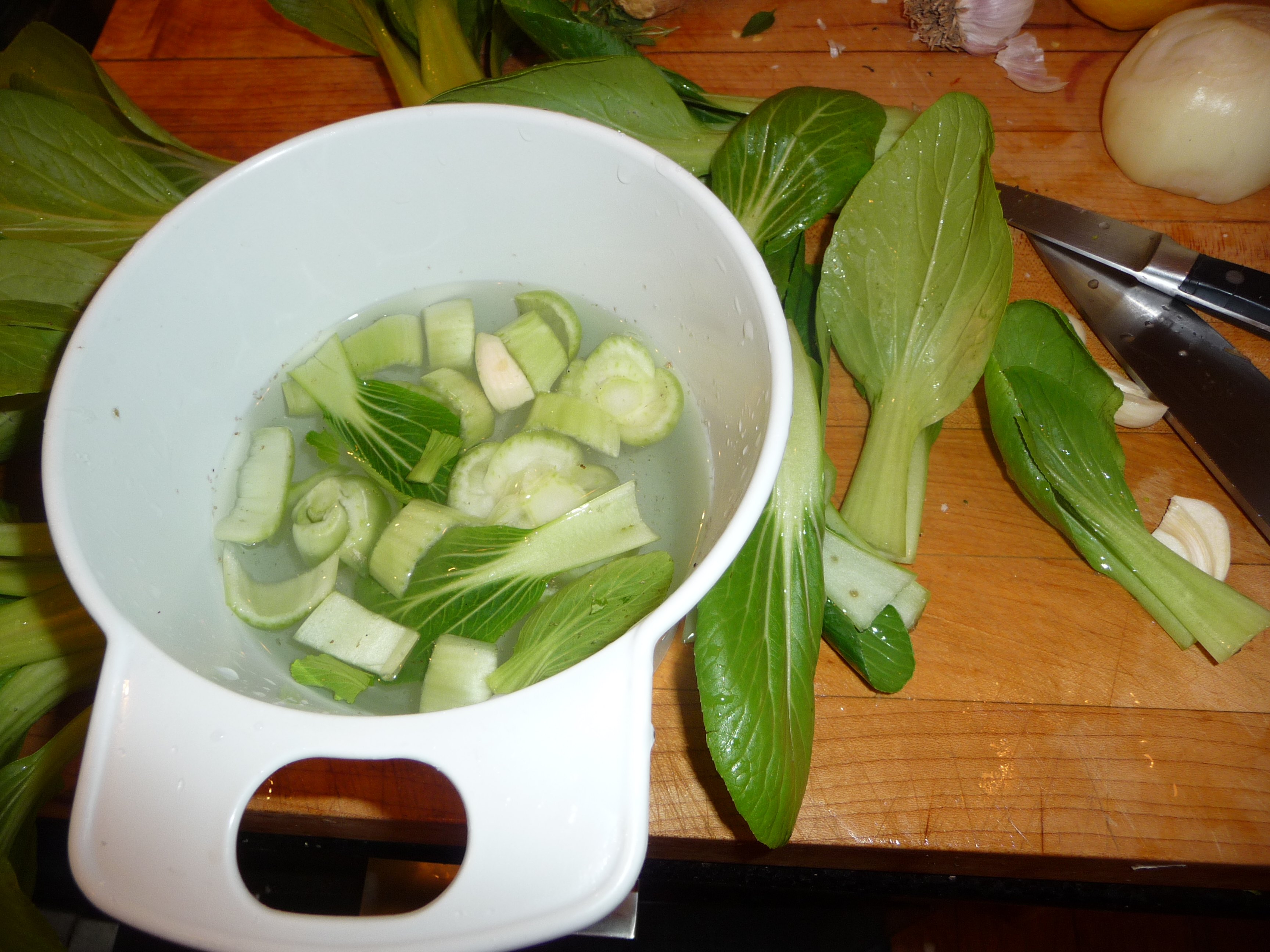
Washing chopped pak choi -soil falls to the bottom of the bowl

I clipped them from their roots, sliced them, and washed the sliced pieces in a bowl of water — even in the confines of a planter soil works itself between their leaves.

Slicing up those crisp green leaves and juicy stalks was very satisfying. Knowing it’s possible to grow something we can eat, that’s good for you AND tastes good, is – I hesitate to use the word because it’s SO cliché but will anyway – empowering. A container, some organic soil and compost, seeds, water, sunlight and –very important – love, will do it. Like money in the bank. (Also a great learning experience for kids).

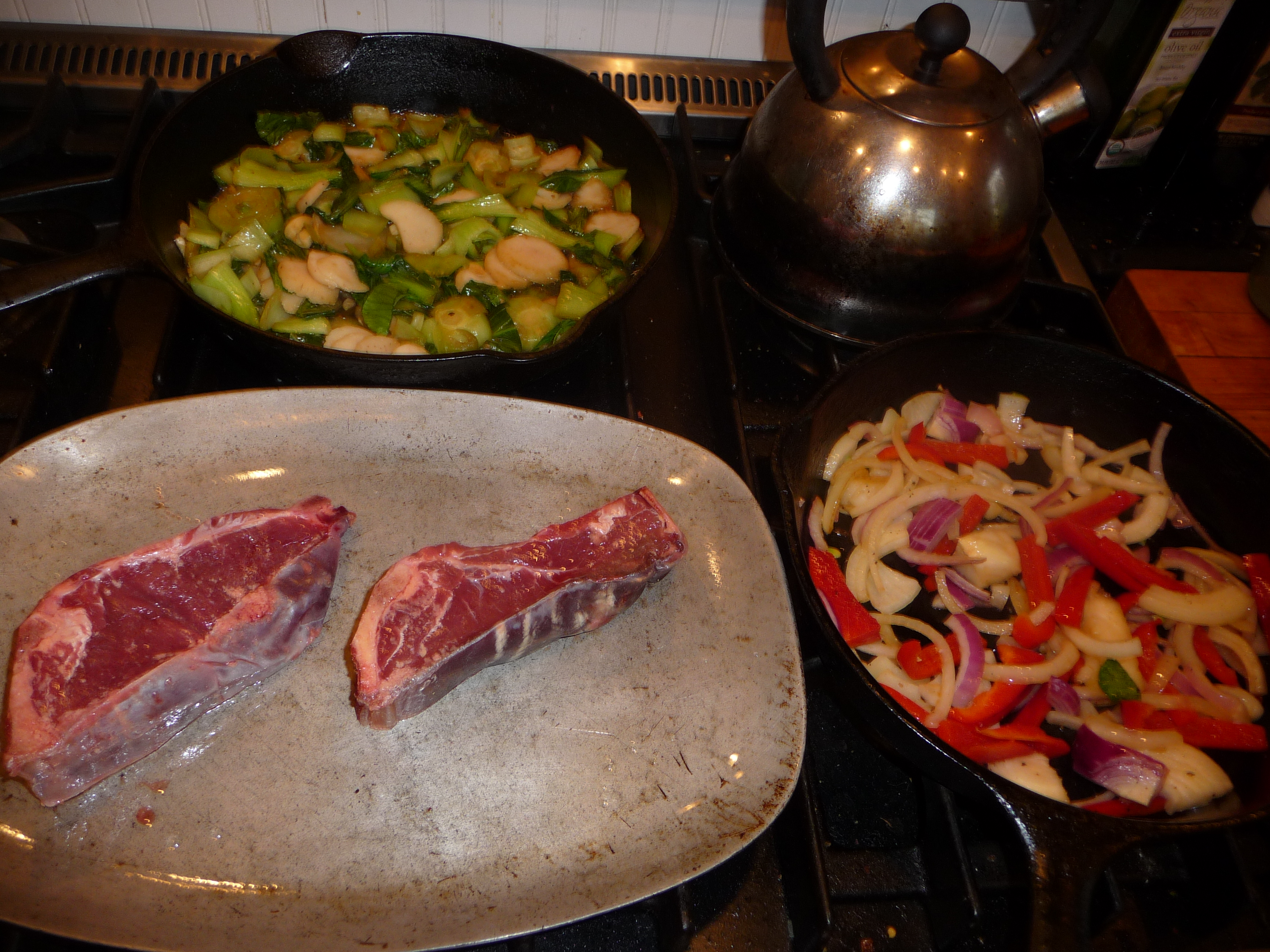
Sauteed pak choi, ginger, garlic and water chestnuts

I sautéed the chopped stalks (thick bottoms for a few minutes then chucked in the leaves) with three cloves of last year’s garlic, fresh-grated ginger, a little soy sauce, a tin of sliced water chestnuts and a splash of chicken bullion.  The garlic, Music hardneck that I grew last year, dug and hung in bunches on the porch in early July, is now sprouting again, which changes the flavor some (though it’s still really nice roasted whole). Once the cloves sprout this time of year, I slice them in half lengthwise and pull out the green shoot, which tends to be a bit bitter, then mince.

 We ate the sautéed pak choi along with sautéed onions and red peppers. Together, the two side dishes beautifully complimented the broiled New York steak, part of the half of a grass-fed Jersey that I buy from Rock Hall farmer, Owen McCoy, who also raises pigs, ducks, figs, and who-knows-what-all.  Dinner only took about fifteen minutes to make from start to finish. Today, I’m going to cut the kale for soup. I’ll quick-sauté the chopped leaves with a shallot and some berbere spice, then fling it all into a little beef stock I’ve pulled out of the freezer. The growing-and-eating season has begun!

*Pak choi seed remains viable and germinates well for several years if kept dry.

Pak choi, sauteed peppers and onions, and NY steaks before broiling

Blanching the Leeks

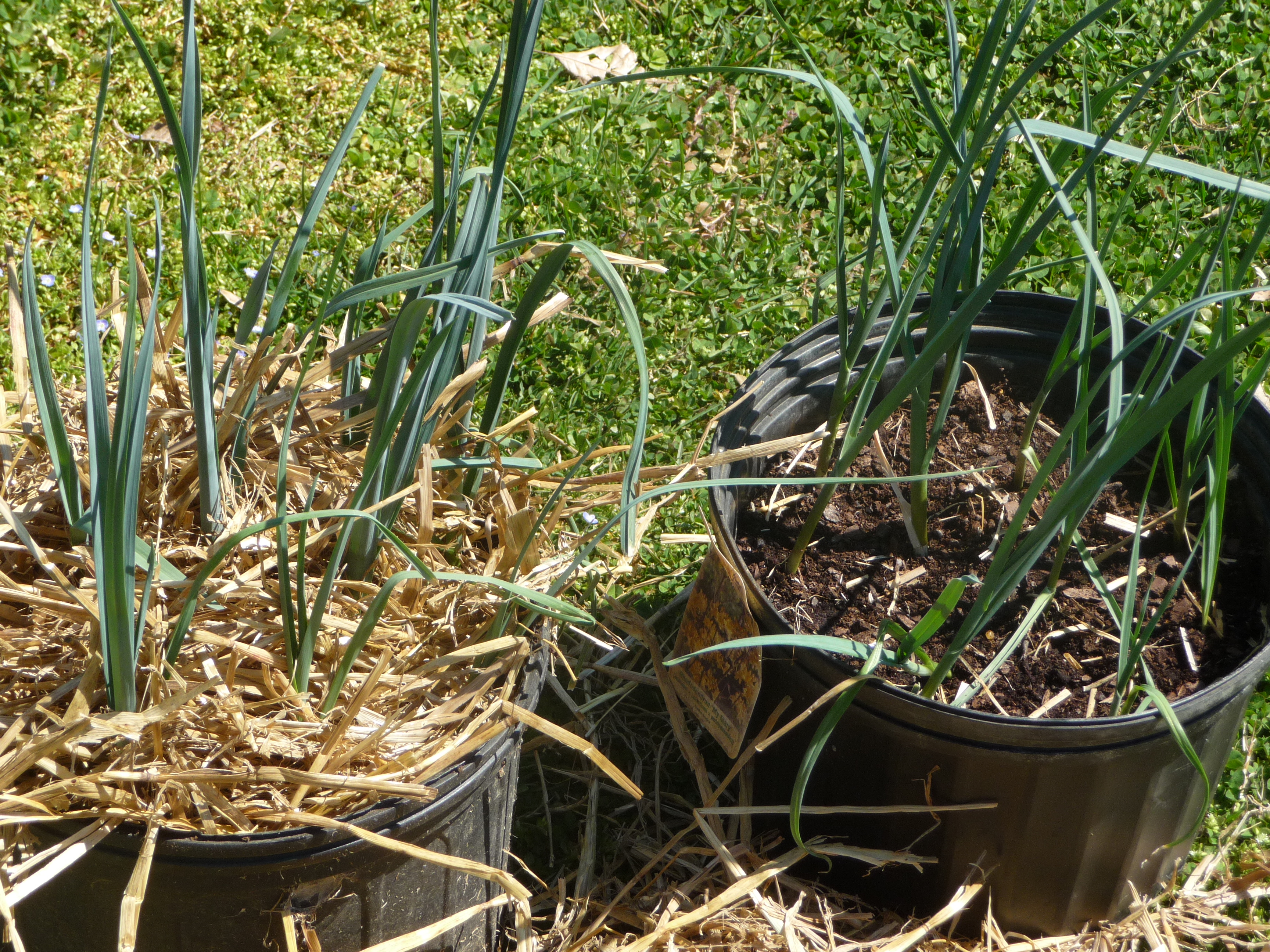
Blanching leeks
Blanching potted leeks with straw

Well, looks like we finally have spring – or maybe early summer – so I’m hauling the cool weather greens that I started in the greenhouse in and out every day to both harden them and keep them from frying as the heat inside ramps up. (So far, the tomato seedlings are loving the heat).  Managed to get some pak choi, lettuce and kale into the ground over the weekend along with two packets of last year’s pea seeds, so I’ll be interested to see what their germination rates turn out to be.

Pak Choi and kale just about ready for harvest

The experimental kale and pak choi are going to be ready for harvest this week (can’t wait – looking up recipes for inspiration) and the leeks I planted in two pots are looking happy, unlike the poor guys I planted in the garden when the blankety-blank plant company sent them two solid weeks before I had specified on their site while ordering. The garden leeks look moribund, though I’m going to give them a chance to resurrect themselves. But the potted leeks have grown quite a bit in the past week-plus, and are now about 11 inches out of the soil with beautiful blue-green shoots. Time to start blanching them by shielding the stalks from the sun while keeping enough greenery exposed to gather rays so they can actually continue to grow.

potted Buttercrunch lettuce nearly ready for a salad

Leeks take anywhere from 90-120 days or so to come to a size that you’d expect to pull and use them, so this will mean I need to feed these potted guys a little as I go along with organic fertilizer. I had planted them the same day I put their confreres in the garden in a combination of soil and compost. Their long growth rate, and my competitive longing for huge, fat stalks, compel additional feeding of the potted ones every four weeks or so.

I love leeks. I often sauté them with shallots, poblanos and a few dried chopped tomatoes (and some chili, adobo and hot sauce) and bake them into a frittata, though last night I added them to the cod filets for supper. Yesterday evening,  I shaved some carrots and chopped leeks (bought) and a shallot, sautéed them for about five minutes in olive oil, added the cod and a splash of pinot grigio and simmered for another five minutes until they were barely done (they were thin). I added some capers and served it up with a dollop of sour cream. Quick, easy, delicious. Gotta love leeks.

p.s. I didin’t think about photographing supper last night until I started writing this — sorry. It looked pretty with carrot ribbons and spirals of leeks alongside a glass of white wine. Boring description will have to do.


Pests in a Packed House

Gus playing keep away instead of fetch
Puppy playing keep away instead of fetch

It’s still cold as I write this (at least ten degrees below ‘normal’). I went out with the 75-pound puppy and played catch (actually it’s more like keep-away since once he gets the ball, he spends most of the time teasing me with it), and watched the sun try to melt the frost off everything in sight.  Dafs were bowed down as were the Peter Stuyvesant hyacinths, and there was a skim of ice over all of the birdbaths.

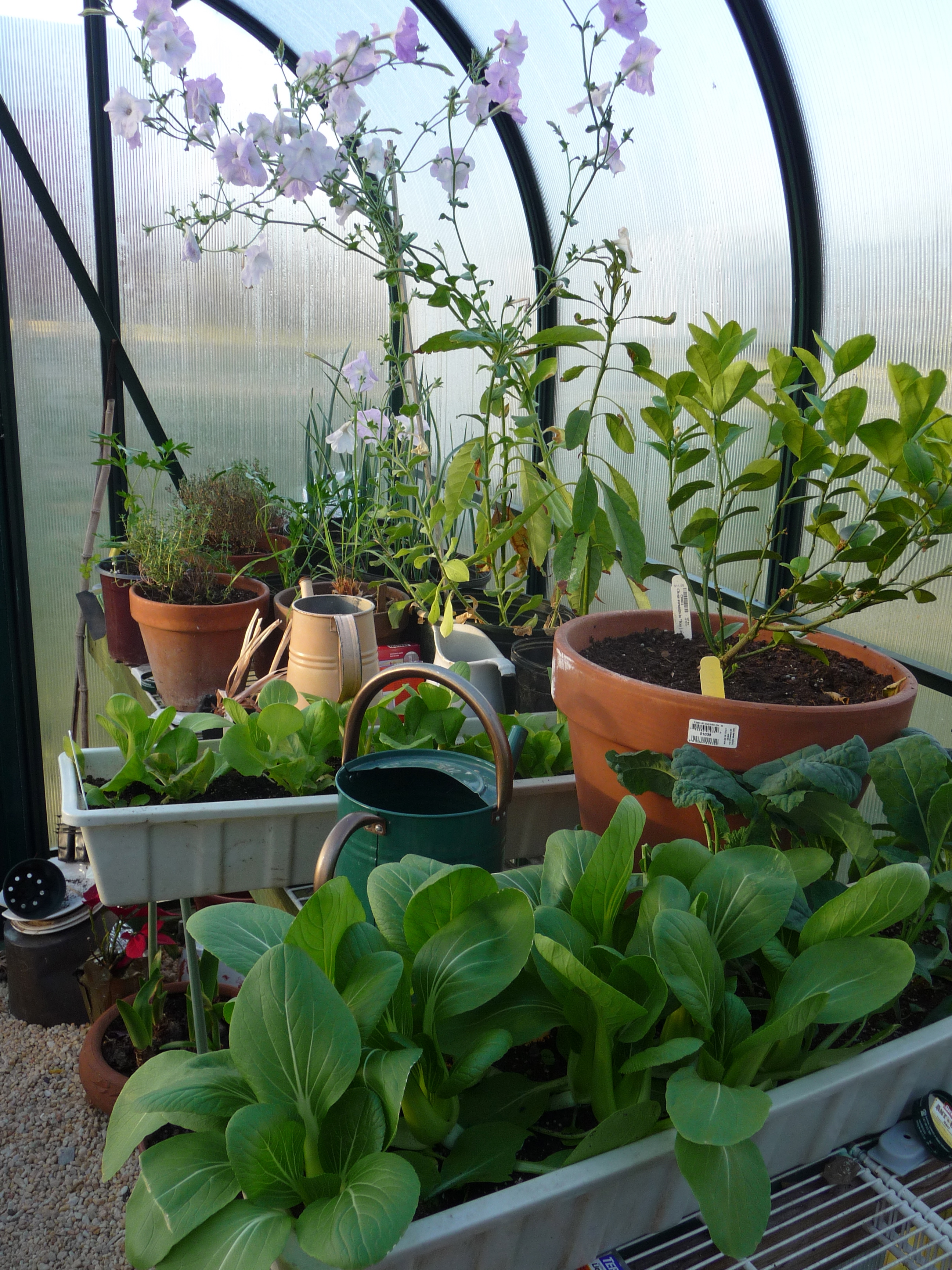
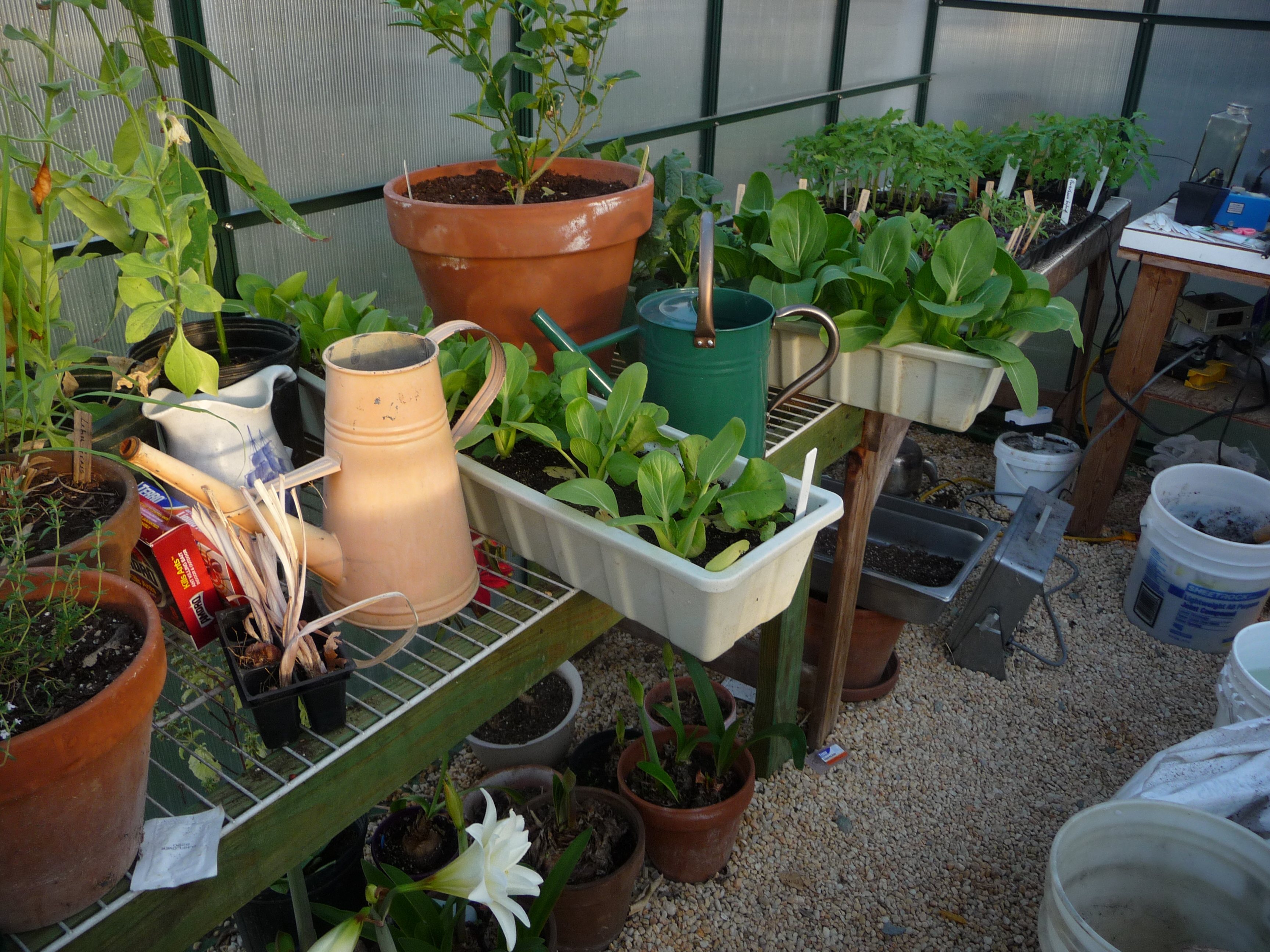
Overcrowded collection of edibles

By this time last year I had a bunch of stuff growing in the garden – beneath row cover to be sure, but thriving. The rhubarb was up, and I was making rhubarb crisp (with grated orange rind and oatmeal-and-pecan crumble topping), and I had cleared off most of the detritus that more assiduous gardeners would have taken down the previous fall. This year, all I’ve got is chickweed and henbit and new shoots from last year’s wiregrass.

 Then I went into the greenhouse and felt like I’d stepped into the spring that we should be having. It’s warm and fragrant with the volunteer petunias my husband accidentally included when he used compost to pot up a sprouted avocado seed. But while the greenhouse, my little bit of heaven, looks much more hopeful, not it’s not without its frustrations.  It’s always something.

55-gal passive heater and chair doing double duty

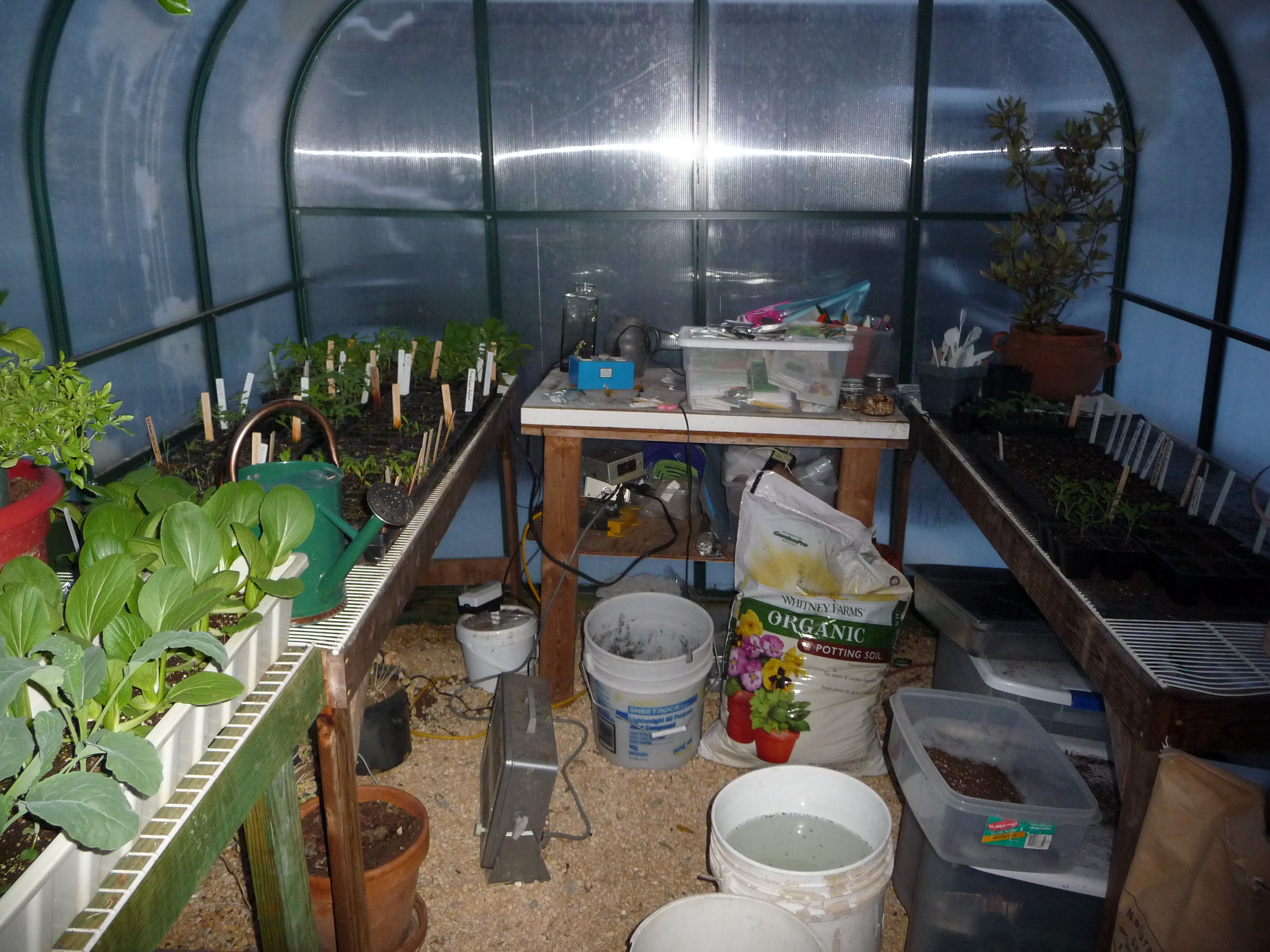
With the slow spring, the things I had thought would be shifted outside by now are still in there along with a lot of the seedlings that are getting bigger and demanding more space all the time. The 55-gallon drum that I painted black and fill each fall with water to act as a passive solar heater is still taking up space in one corner, and now sports one of the Meyer lemon trees and a mixed flat of arugula and pak choi on its lid.  The potted leeks (another experiment) are stuffed into a corner beside three pots of French thyme, two of parsley, a couple of avocado plants, and a Key lime to say nothing of the two long experimental containers of pak choi and lacinato kale.  Farther along the flats of tomato, basil, pepper, and more sit on heat mats, while the second Meyer lemon and an ailing bay plant given me years ago by a friend are crammed into the northeast corner.

 Overpopulation is not healthy. The crowd has helped to foster not only an infestation of white fly, which I had been battling in the Meyer lemon trees with insecticidal soap (and only a modicum of success), but two days ago when I was bringing the flats of pak choi and arugula outside for hardening off, I discovered a burgeoning infestation of aphids and not a ladybug in sight. I hit them with insecticidal soap. At the moment  it looks like it’s solved, though that could change. Life turns on a dime.

Chock-full greenhouse with amaryllis blooming beneath benches

Some of the kale and pak choi are within a couple of days of being harvested for stir fry, so I’m right now hunting up my reading glasses so I can figure out how long I need to wait after spraying before I can safely wash and eat the stuff I’ve been babying and hovering over like a helicopter parent for weeks.The weatherman promises that April will ACTUALLY get here this weekend, which is when I hope to get some of that crowded greenery planted. Let the games begin!

This Is Planting Season? Really?

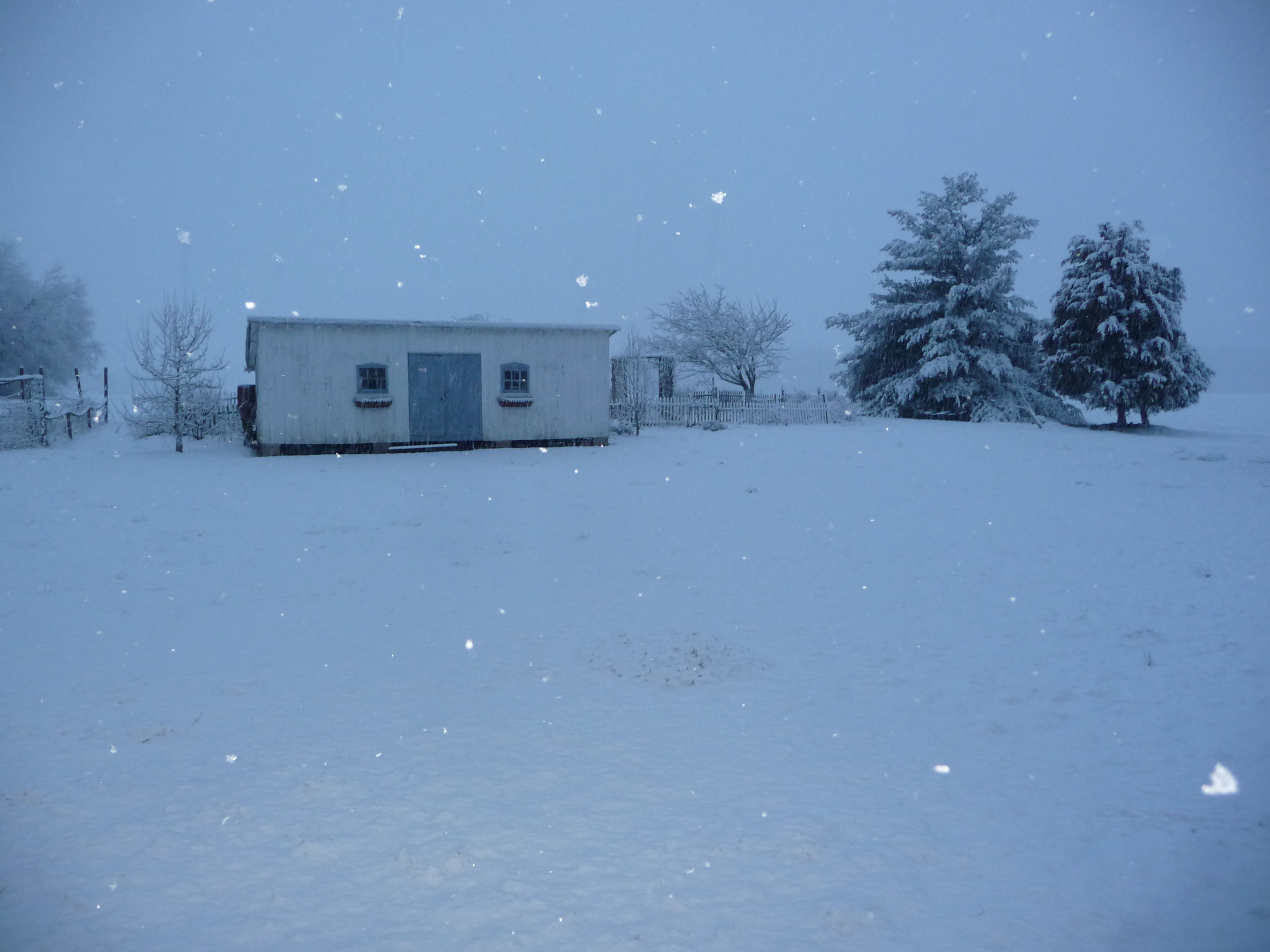
Behind the shed is the garden. Agghh!

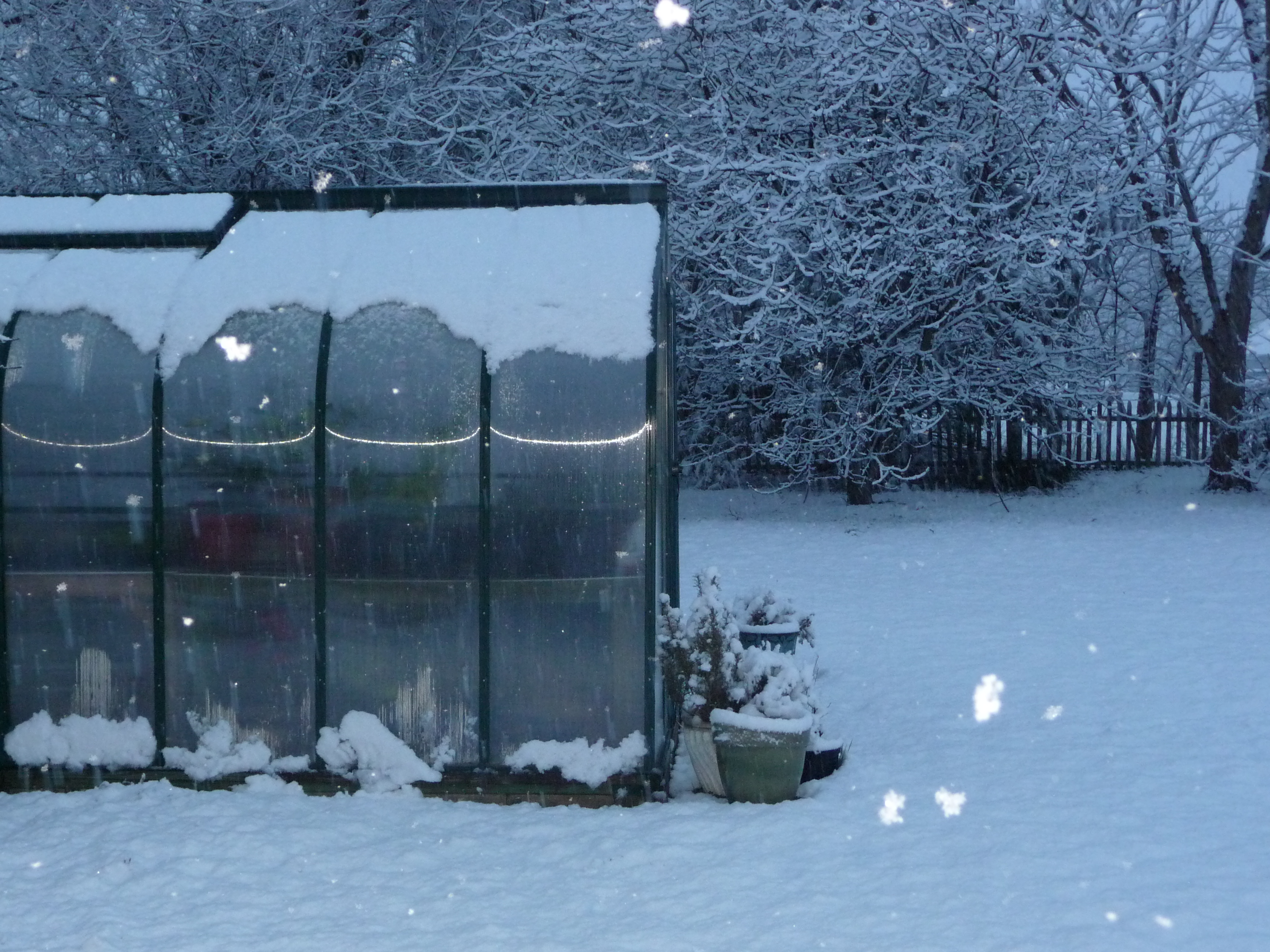
Woke up this morning – the fourth day of official calendar spring, mind – to snow. I’ve got baby leeks in the garden already, peeking out from beneath a light blanket of compost followed by straw and then blanketed (I sure hope) by row cover. And now snow. I’ve got pak choi in the greenhouse that is almost ready to eat – part of this season’s experiment in potted edibles –as well as pak choi, lettuce and kale seedlings that are in desperate need of a garden bed and some sunshine and a little seasonal warmth. (Like me) And now this. I took photos this morning AFTER what should have been dawn at 9AM and it all looked grim, grey and impossibly icky.

Pak choi on left in this year's potted edibles experiment
Pak choi on left in this year’s potted edibles experiment

I’m reminded of a line in Shelley’s Ode to the West Wind (I had to look the name of the poem up, I only remember the tagline): If Winter comes, can Spring be far behind? From your mouth, Percy, to God’s or Nature’s or fill-in-your-term-for-something-larger-and-more-overarching-than-our-individual-little-selves, Ear!

Had to believe we're 5 days into spring!
Hard to believe we’re 5 days into spring!