Turnips for The Year of The Root Crop

Raw roots 2
Gold Ball turnips, Hakurei turnips and carrots right out of the ground and washed

I don’t really know who makes these declarations — I hope they don’t clog up an already clogged Congress to get something like The Official Year of The Root Crop powered through — but it is, officially, somehow, The Year of The Root Crop. It’s a good thing, since little by little, we as a society are trying to drag ourselves back to the kind of eating that once made us one of the healthiest nations on earth only a few decades ago. For those who don’t already love vegetables; I’m sorry. I hope you can learn to enjoy them, as there are literally thousands of ways to prepare them, and with a little assiduous and open-minded work, you, too can get there. I have friends who only eat the white food groups, or the chocolate food groups, or the wine and beer food groups, so I do get it, but we continue to have people in for breadth of experience to say nothing of fun and laughter and conversation.

Among other things, I write for University of Maryland’s Grow It Eat It blog along with a lot of other gardener cooks, who have recipes for all kinds of seasonal veggies as well as pictures, tips on growing even a little bit of your own food — some of of have patio pots that produce cukes, lettuce, some carrots, whatever. Have a look. It’s a nice variety of people and ideas.

http://groweat.blogspot.com/#axzz2H76fhWGL

Now to the root vegetables: I didn’t grow them, but I’m eating them like crazy this winter. I get turnips (and carrots and more) from our friend, Theresa Mycek, the grower/manager of Colchester CSA, who lives just down the road and grows a fabulous selection of carrots, beets, turnips, and daikon radishes (and the proverbial more). http://www.colchesterfarm.org/

Peeled turnips
Peeled Hakurei and Gold Ball turnips

I’ve always loved vegetables, but I didn’t used to like turnips ONE BIT until I had some fresh from the ground – and not overcooked.  Old, and overcooked they’re bitter and icky. Fresh and well cooked, they’re really good. Theresa grows three kinds of turnips – Purple Top, Hakurei, and Gold Ball. Purple Top, with pretty purple shoulders, is what we usually see in the grocery store. Hakurei is a white globe that’s crisp and slightly juicier and milder than the purple top, so in addition to being good cooked, it’s nice cut up raw in a salad or shredded in coleslaw like a radish. Gold Ball turnips have creamy, pale yellow flesh and are sweeter than Purple Top, especially when roasted.

Turnips (brassica rapa), which are relatively high in Vitamin C, are members of the same family as broccoli, kohlrabi (aka turnip cabbage), and rutabaga, (aka Swedish turnip or Swedes). The turnip itself is a large taproot, whose leaves are also edible. People over here on the Eastern Shore often stew the greens (which constitutes a mess of greens) with bacon or ham and some onions or sauté the young leaves.

Turnips take 40 to 65 days from seed to maturity, depending on variety. For example, Southern Exposure Seed Exchange’s fall-planted Amber Globe turnip is 63 days to maturity, while the spring-planted Nabo Roxo Comprido turnips reach maturity after only 40 days. Turnips are generally cool weather crops; you can sow seed practically as soon as you can get into the garden in spring. Succession plant if you want a steady crop until the heat sets in in June, then sow them again in August for fall and winter eating. You can actually grow turnips in containers too, being sure to thin them so they have sufficient space to grow. Below is a link to a list of turnip growing tips.

http://www.allotment.org.uk/grow-your-own/vegetables/turnips
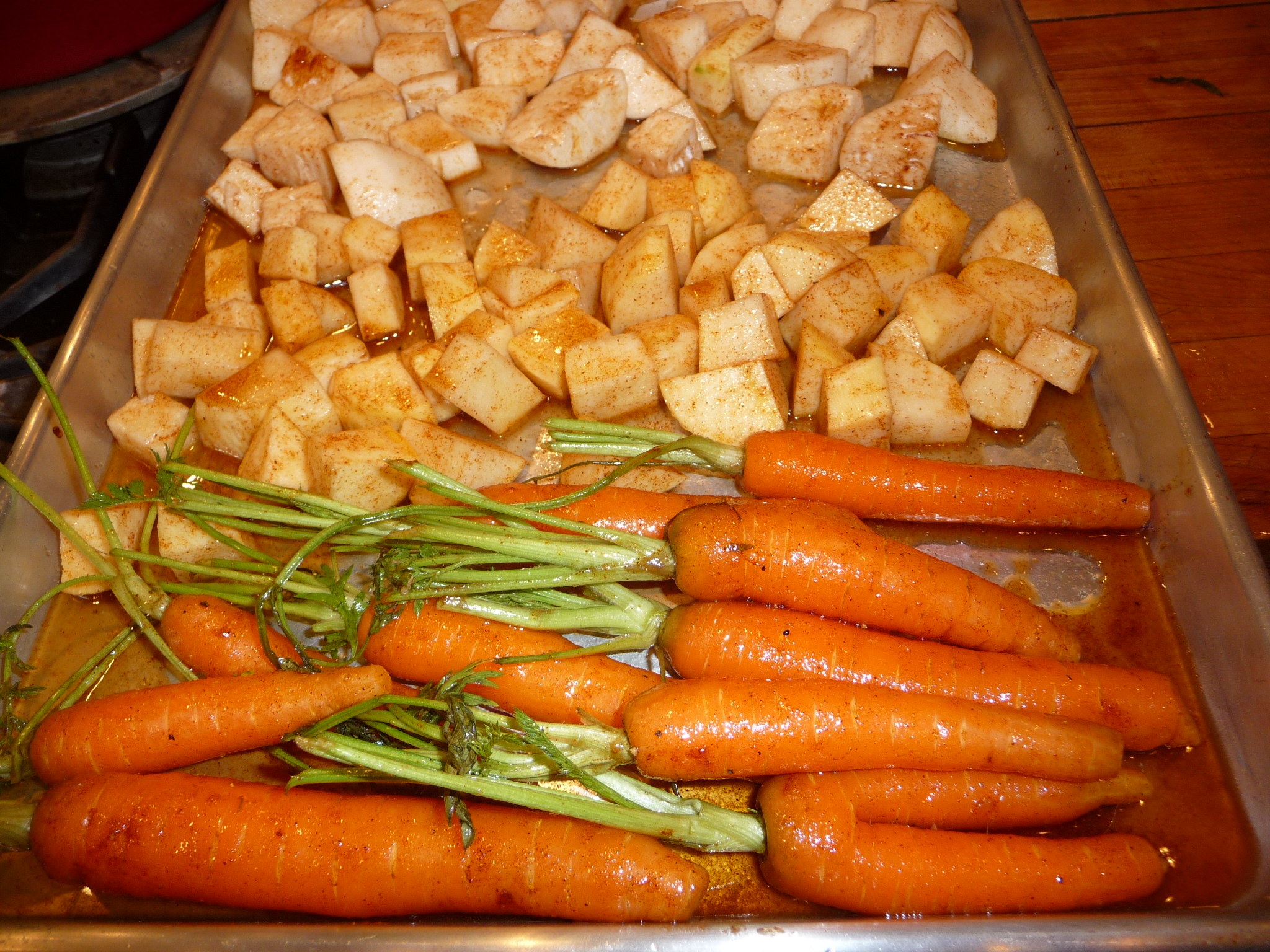
Turnips prepped on sheet
Turnips cubed, carrots all prepped for the oven

I didn’t learn to enjoy turnips until I began to grow them myself. We’d usually steam and mash them with caramelized onions, parmesan and a little splash of cream, like rich mashed potatoes – and they’re delicious! Some roasted garlic adds a little dash of je ne sais quoi. But there are other ways to cook them. For Christmas this year, I roasted some in the pan with the leg of lamb along with potatoes, carrots and onions. Yum yum yum. Usually, though, I dice, season and roast them and keep them in the frig to pull out when I want. They’re delicious as a side dish with chicken or goose (or duck or whatever else your resident Visigoth drags home).  More often, I pull a handful out of the container in the frig, warm them a little and add them to salad with toasted hazelnuts and blue cheese with a splash of pear or fig vinegar and olive oil.

To roast turnips:

Peel and dice turnips into whatever sized pieces you like. I usually do them about ¾ of an inch because they shrink as they roast, and I like to have the outsides toasty and the insides still soft. Others cut them small for a chewier texture.
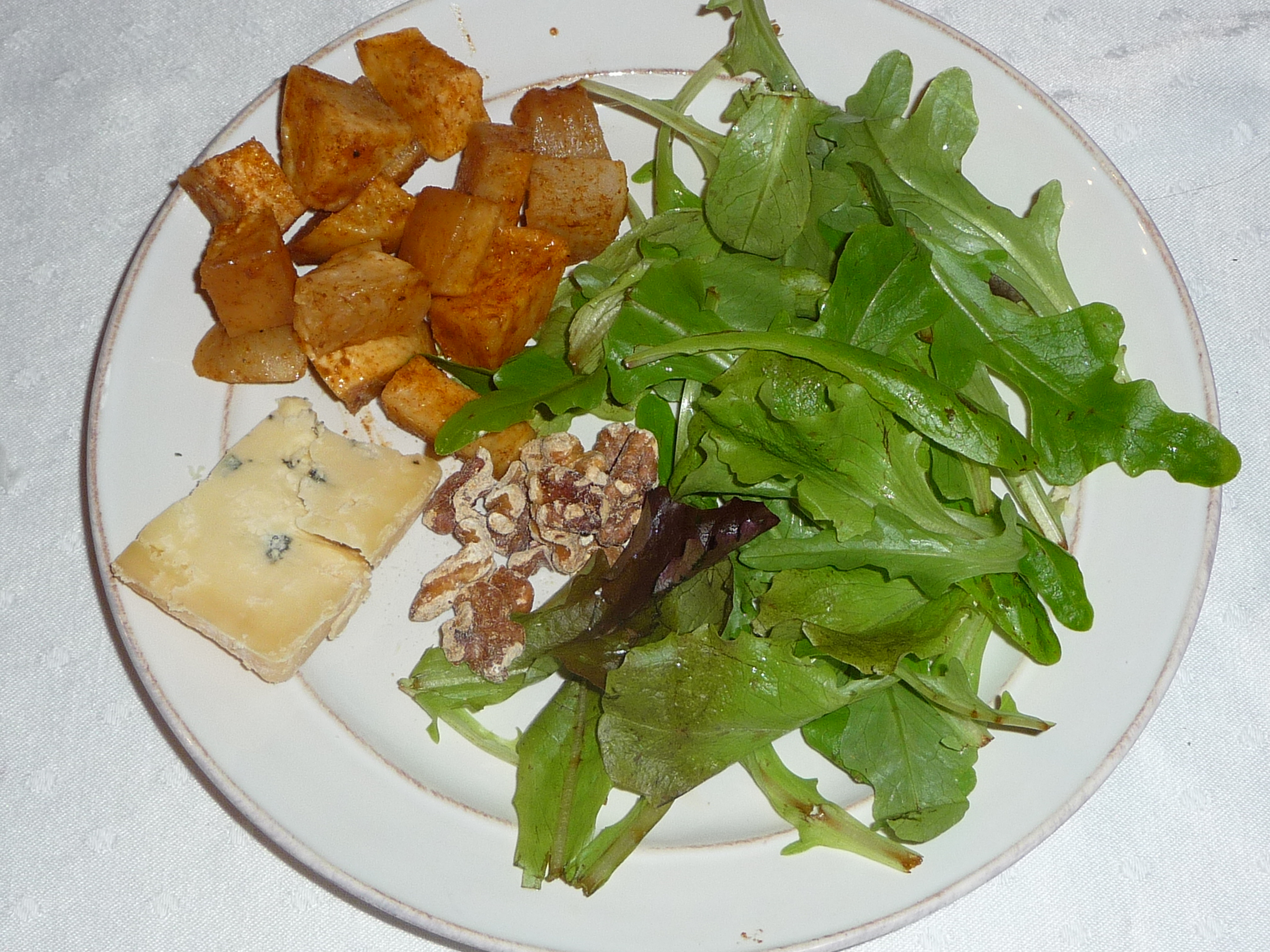
turnips roasted in salad
Roasted Gold Ball with greens, stilton and toasted walnuts waiting for balsamic dressing

Toss them with maple syrup or honey, salt, pepper and a bit of oil with whatever spices you like to add.  I usually do either berbere spice or smoked paprika and Adobo. Curry’s nice too. Toast at 350F for about 35 minutes or until desired doneness.

For seed, you can check out:

http://www.southernexposure.com/

http://www.seedsavers.org/

http://www.johnnyseeds.com/

http://www.cooksgarden.com/

(Just to get your started).

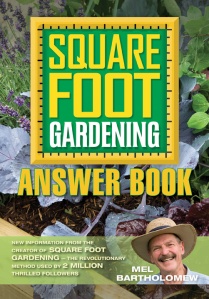
Book Review of Square Foot Gardening Answer Book

9781591865414When I was a kid, I had a terrific book called The Make-It Book, which detailed a bunch of creative projects, both rainy day and non-, for kids of all ages that kept me and my brother happily engaged for years. The Square Foot Gardening Answer Book reminded me a bit of that book. Simply (but not simplistically) written, encouraging, with clear drawings and straightforward instructions, it is a soup-to-nuts guide for anyone interested in creating a small, productive and easy-to-maintain garden in a host of spaces. Square foot gardening (SFG) is great for the new gardener who wants to start smart and keep going happily, but is also good for the time and space-crunched, who want to savor the pleasures and satisfactions of gardening without making the kind of commitment row upon row of veggies can require.

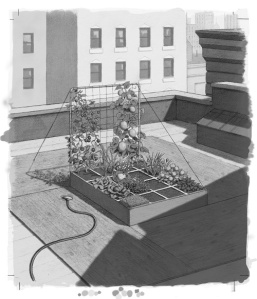
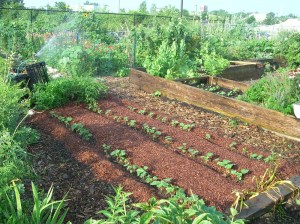
A square foot garden as the name suggests, is constructed in a grid so it’s a space-miser. The planting takes a page out of Nature by mixing plants – for example, cabbage with nasturtiums (which help deter cabbage moths and add peppery spice and color to salads), lettuce with root crops like beets, carrots and turnips, tomatoes and peppers with basil, cilantro and parsley – an approach that is not only beautiful to look at and productive, but helps to cut down on problems with pests and disease.

RooftopGarden_B&WSquare foot gardening first came to prominence in the ‘70’s when many back-to-the-landers, most of whom grew up in the burbs and knew nothing about growing something to eat, decided to become self-sustaining. Tilling, planting and cultivating rows of vegetables turned out to require more space and labor than these new mini-farmers had anticipated, which is one thing that made square foot gardening so appealing. It shares the interplanting principle with the French intensive method, which at the time was also gaining adherents for its big production in a relatively small space. But SFG was simpler and far less backbreaking than the double-digging usually suggested in French intensive gardening.

The SFG Answer Book is straightforwardly laid out and combines answers to the questions author Mel Bartholomew has been fielding since publishing his first book on SFG in 1981. It offers practical advice for planning, constructing and maintaining your own square foot garden, regardless of where you live. Chapters include Planning and Locating Your Square Foot Garden, Building Your SFG Boxes, Planting and Harvesting, Working with Mel’s Mix (the growing medium aka soil), Dealing with Pests and Problems, and Making a Difference with SFG.  (Bartholomew created the Square Foot Gardening Foundation, a nonprofit that spreads the message of SFG through humanitarian projects throughout the world in an effort to end world hunger.).ANSFG 3 1019_HR_B&W

This book is for anyone who wants to start gardening, whether it’s food, annuals, perennials or a combination or all of the above. It’s also a perfect way to start gardening with kids, or to start kids gardening on their own if they prefer to do it completely themselves since the project is manageable in small bites, but is completely scalable if they want to ramp up, or maybe have their own square foot space beside that of a parent, friend or gardening mentor.  SFG Answer Book addresses the problems of limited space, offers potential solutions for less than optimal sun exposure and is very much focused on health for both plants and people.

Square Foot Gardening Answer Book by Mel Bartholomew (Cool Springs Press, $16.99).

Food Court Flash Mob for Christmas

There are several things that bring the Christmas spirit. One of the biggies is Handel’s Messiah. I often miss all the programs that float around, but the flash mobs of the Hallelujah chorus are a terrific compensation. Here’s one that I wish I had experienced firsthand. But the magic of Youtube brought it right into the office.

Merry Christmas, Bon Noel, Felix Navidad

http://www.youtube.com/watch?v=SXh7JR9oKVE


Any Size Anywhere Edible Gardening Book Review

6a01348109b26f970c017c317b0c2b970b-800wiI would have enjoyed Any Size Anywhere Edible Gardening by William Moss (Cool Springs Press, $21.99) when I was in college, worked a couple of jobs and lived in a second floor apartment overtop a parking lot in the university’s no man’s land between city and suburbs. The author, who is an instructor at the Chicago Botanic Garden, offers to space-bound, inexperienced, time-crunched souls both the encouragement and the practical tips needed to grow a little bit of their own produce.  Moss, whose breezy delivery welcomes you in, has four mantras that immediately endeared him and his gardening philosophy to me: have fun; don’t stress; start small; and don’t let a lack of knowledge intimidate you.

Simply (though not simplistically) written in an accessible style, the book introduces the uninitiated to the basics of small-space gardening then works toward the practicalities of healthy production. Throughout the book, Moss lauds the pleasures and benefits of the enterprise, but also includes such down to earth topics as: soil; sustainability; best management practices; starting seeds, fertilizing and watering; and wildlife ecology — all without getting preachy or overwhelming.

In addition to container gardening on balconies, rooftops, and patios, Moss illustrates the space-saving benefits of vertical gardening – for example, sticking a trellis for the peas into the container – as well as the variety of plantable spaces possible — hanging baskets, green walls, whacked-together boxes, cinder blocks, pots, etc. He also reminds readers of the possibility of community gardens – most urban areas now offer a number of community garden spaces.

AnySizeAnywhereEdible_Pg68
A community garden plot

A couple of quibbles: I would have preferred more photos of cramped urban spaces –potted balcony gardens, raised beds on concrete walkways or parking lots instead of what look to be the strategically-photographed corners of larger gardens. While I appreciate his list of vegetable possibilities including beans — especially pole beans, since they tend to be heavy producers over several weeks — I would have liked more vegetable recommendations that would give more culinary bang for the horticultural buck. Things like broccoli or cabbage don’t make all that much sense in a pot or small box–you tend to get one or two, big, much-loved heads for one or two meals — whereas herbs mixed with peas, followed by a tomato or pepper or even okra or two produce more food longer. Likewise sweet potatoes, however pretty the vine, seem less than an economical use of space. To my mind, we can use limited space far better by planting greens such as chard, kale, lettuces, arugula, etc., which you tend to cut and cut again (although I do understand the draw of growing a big climbing squash plant for the drama alone, so maybe it’s just a personal choice). Having said all that, there’s much to appreciate in the book.

Moss’s experience, the range of information, which assumes an audience that wants a seed-to-harvest primer, and his everybody-in-the-pool attitude. He’s all about the fun of growing your own food without turning it into a chore. I particularly like the description of a compost pile as an ‘out-of-the-way heap of organic matter that you poke at with a pitchfork from time to time,’ a wonderfully laid-back approach — leaving aside the issue of where apartment dwellers or urban dwellers whose municipalities may have regulations against uncontained refuse that feeds vermin might site one.

A contained, interplanted space

Any Size, Anywhere Edible Gardening: The No Yard, No Time, No Problem Way to Grow Your Own Food is not what I would call the definitive text on the subject, but it’s a good soup-to-nuts starter for those who want to get their food-gardening feet wet. It would make a great gift to a student, an apartment or condo dweller or anyone with limited space and energy, who simply wants to add to the pleasure and satisfaction of their lives by growing a little something to eat.

Planting Hardneck Garlic on an Indian Summer Day

Garlic cloves shoved into a grid in the prepped bed

Siberian, Russian Giant, Music and Keith’s Garlic cloves

The past three days were gorgeous, like a return to spring, so my mind naturally returned to the garden — which I  confess I had left pretty much to its own devices the past several weeks.  I had planned to plant hardneck garlic this year as usual, but had left it kinda late. Came the hurricane, and chill weather, and a feeling that I had missed the horticultural boat. Then Gary, spurred on by the brief Indian summer, foolishly sweetly asked what he could do to help. Over morning coffee, I gave him the chore of prepping two small beds, figuring he would forget it during a day of brushing goose blinds. Wrong. He went out immediately with a garden fork, looking a little like a man marching into battle, and not only weeded and dug and fluffed the beds, he also spread two loads of compost over them, which meant I really had to follow through that day instead of sitting in a garden chair with a beer and book and a blissful expression on my face enjoying the last balmy days of the year.  So I did. Get up off my duff, that is.

Garlic is the Rodney Dangerfield of the larder. It gets no respect. Even sophisticated cooks settle for those aging white knobs in the supermarket, most of which come all the way from China, which is the world’s largest garlic producer last time I checked.  But most of us settle because we haven’t experienced the locally grown difference. I hadn’t until a few years ago when I tasted Music hardneck garlic, a large-cloved Italian variety with a sweet pungent flavor named for Al Music who brought it to Canada in the 1980’s. Compared to the store-bought stuff I’d been using for years, it made me feel as though I’d been cooking with oven mitts over my taste buds. Crisp and juicy, it brightened everything  – aioli, pesto, chicken cacciatore, pepper hummus, Moroccan beef, and 10-minute pasta. (Throw together in a bowl: torn brie cheese, chopped fresh tomatoes, fresh basil, and mashed garlic. Add salt, pepper and a splash of olive oil. Cook linguine then dump the hot drained pasta over the raw sauce and mix. Supper’s ready. Don’t forget the red wine.).

Softeneck garlic varieties grow a bulb that’s a clustered clump of cloves, while hardneck garlic has five to seven cloves in a single ring around a hard center stem. Hardneck types also produce a late spring scape, an elegant edible green curly-cue at the top of the stem, so hardneck’s a kind of two-fer culinarly-speaking. Softneck garlic, which has no center stem (hence no scape) usually stores better and some say they’re easier to grow, but hardnecks, which store up to six months in a cool, dry place, have better flavor in my estimation.

Music Garlic waiting to be broken apart at last year’s CSA planting

Planting garlic is simple. (And once you’ve grown it, you can save some and plant your own for next year’s crop.). Each planted clove produces a new bulb. It needs well-drained soil and will rot (as mine did one year) if you plant it in too-wet ground without enough steady sun to dry it sufficiently, or if you mulch it too heavily and leave heavy sodden mulch on during a damp spring. Having said all that, it’s actually easy to grow.

The two beds Gary prepped are both new to garlic in our garden and are fairly well-drained so we have high hopes. Break the bulbs apart into cloves, being sure to leave the plate (the flat foot of each clove) intact; it’s where the coming season’s roots will emerge. Push each clove down into loamy earth on a dry day (like yesterday — it was lovely, warm breeze, sunshine, gorgeously prepped bed I could get my fingers into easily) about 6-8 inches apart. I plant mine in a grid and will mulch them lightly with fresh straw once I get hold of some in the next few days.  

Planting garlic at Colchester Farm CSA 2011


Winter Squash and Roasted Vegetable Soup


Iranian winter squash and long-necked pumpkin in September

My summer squash did diddly this year — I planted seeds three times and three times the critters ate the plants before they could get to any size at all. Fortunately, I managed to grow some winter squash, started from the saved seed of an Iranian and a long neck pumpkin of two I had bought last year from a nearby farmers’ market. I started the seeds in flats that I put up on sawhorses in the back yard in about early July. (Sawhorses were to keep the foraging groundhogs, cats, slugs, squash bugs and whatever else that  inhabits our little wildlife acre from eating the plants –AGAIN!). I planted out decent-sized plants in mid-July and by September, they were sprawled all over the west side of the garden. They produced some really great squash, which we harvested before Hurricane Sandy tromped through. And the cardboard box of Iranian squash and long neck pumpkin now stored on our unheated back porch has bucked me up no end. (I had gone into a deep, existential funk; if I couldn’t even grow ZUCCHINI for pete’s sake, what GOOD was I!?).


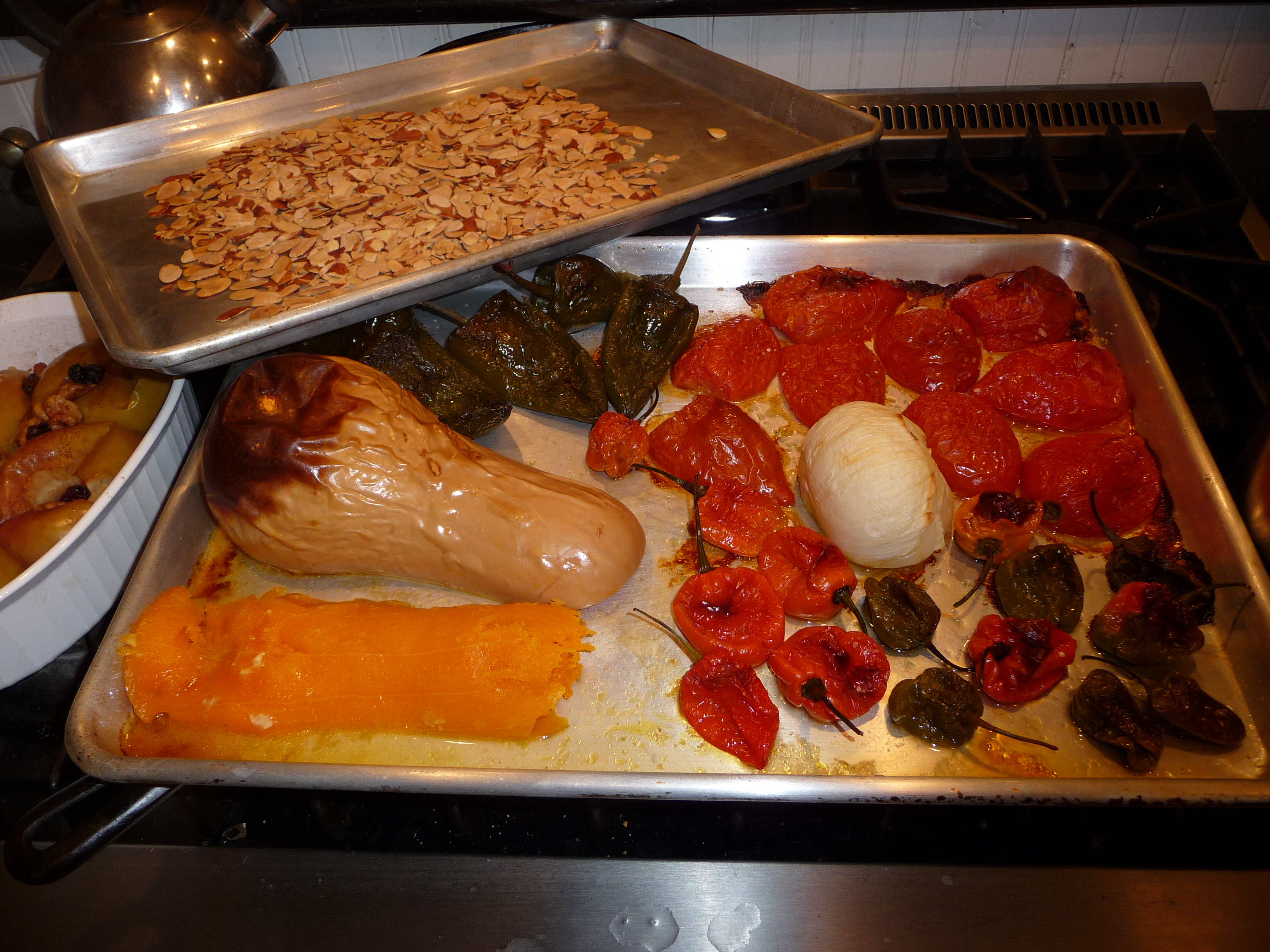
Roasted vegetables for soup and for romesco

Winter squash are theoretically easy to grow. You stick the plant in the ground in about June and harvest between 90 and 120 days later, depending on variety. In my experience here on the Upper Eastern Shore, they are squash bug magnets.  If you don’t catch those suckers early and crush ‘em – or regularly squirt them off plants with soapy spray (but crushing is better and infinitely more satisfying), you won’t have winter squash.Winter squash, a member of the Cucurbitae family that includes melons and cucumbers, is called that not because we harvest them in winter, but because many have very dry flesh and as a result store wonderfully so we can eat them all winter. (I once grew a 15-pound Blue Hubbard that I harvested in October and we ate in late May).  Not only that, they are packed with beta carotene (Vitamin A, critical to eyes and other body parts), Vitamin C, and potassium among others, and retain as much as 85% of their nutritional value over months of storage.  (Generally speaking: the darker the flesh, the harder she shell, the longer it stores and the more nutrients it retains.).

A few Iranian and long-neck pumpkin with over-the-hill cukes that are now compost


I’ve roasted some crescent Iranian slices for salad with arugula, toasted walnuts and goat cheese, cubed another and roasted it with paprika, garlic, maple syrup and salt and pepper then added it warm to a plate of spinach and French lentil salad. A couple of days ago, when it was chilly and blustery, I finally roasted the spare butternut our daughter dropped off months ago before she went to sea along with the very last of the mild habaneros and Big Mama tomatoes and made soup. The rest of the winter squash still sit in a cardboard box on our unheated mud porch waiting to be used throughout the winter. Yum yum yum.

Roasted Butternut and Pepper Soup

Roasted Butternut and Pepper Soup

 1 butternut or other winter squash,    halved and seeded

1 small onion peeled and halved

4 small very mild habaneros or other mildly spicy pepper

1 medium sweet pepper, halved and seeded

2 cloves garlic, unpeeled

4-5 paste tomatoes, halved ( a tin of fire-roasted tomatoes would work just as well)

olive oil for rubbing over vegetables

1 small apple, cored

1-2 tsp berbere spice

1 tsp smoked paprika

dash of Pick a Pepper sauce

salt and pepper

3 cups chicken stock or vegetable stock or water

 Grease or cooking-spray a baking sheet. Lightly oil the vegetables, rubbing them all between your hands. Put the butternut cut-side down on the sheet and surround with the rest of the vegetables and the apple. Roast in a 350-degree oven for about 45 minutes or until they’re all soft (the onion may still be a little stiff). Pull skin away from squash, tomatoes and apple (if you do this when they are hot, it helps to wear rubber gloves to keep from searing your fingers). Peel garlic. Put it all into a pot with the spices and simmer for about 15 minutes. Run a hand-blender through it, or wait until it cools some and puree it in the blender. Serve with chopped herbs, a dash of chili oil, and some crumbled feta or blue cheese. It’s really nice on a cold evening by the fire with a glass of red wine and some toasted baguette or fresh whole grain bread.

Building Soils Naturally

I’m not an agronomist, and I have a feeling you’d really need to be one to properly assess this book. But I’m totally on board with the notion that you need to feed the soil and all its critters before it can feed the plants that grow in it. That’s the premise of the just-published Building Soils Naturally: Innovative Methods for Organic Gardeners by Phil Natua (Acres USA, 2012, $19.95). Nauta, who taught organic horticulture at Gaia College and was a director of the Society for Organic Urban Land Care, asserts that feeding the soil well not only helps maintain the health of our planet, it grows vegetables and fruits that are so nutritionally dense that they don’t rot for weeks. I find that last claim a bit suspect, though it does make sense to me that the more nutrition available for fruit and vegetable uptake from the soil, the more nutritionally dense they will be. Twinkie-effect aside, the book is well organized, is written in a breezy style and has lots of great info.

There are three sections:  The Soil and Its Inhabitants, Six Steps to Creating Healthy Soil, and Garden Action Strategies. Within those sections are short chapters on such things as Soil Nutrient Testing (and choosing the best testing facility), Calcium and Phosphorous, Other Major Nutrients, and Garden Health Management Plan. Each chapter has a short review list so you can quickly check to see what chapter might be most helpful to your particular question if, like me, you have trouble keeping every single bit of chemistry, Cation Exchange Capacity (CEC) and the chart of Reams-Based Ideal Nutrient Levels in Soil in your head.

Natua restates – but enlarges upon — much of the currently accepted wisdom in the spiral-bound Master Gardener tome that’s laughingly called the ‘handbook,’ though Building Soils Naturally is a much more detailed look at soil ecology and chemistry and includes soil nutrients’ effect on Brix (a measure of the dissolved solids in plant juice, including sucrose and fructose, vitamins and minerals, protein and amino acids and more), which has got to affect the density of vitamins and minerals in their fruits.

Nauta also takes issue with some current conventional wisdom. For example, he says that soaker or drip hoses that target individual plants deprive the organisms in the un-watered soil and affects nutrient uptake; he prefers to overhead water since research at University of Nebraska shows it loses only about 4% to evaporation. (I would think the real percentage loss would fluctuate depending on ambient temperature, wind velocity and sun exposure, but never mind.).  Regardless, overhead watering, which is what Nature does, makes sense, provided you’re strategic and not profligate with it.  For example, in our garden during drought, the dust from the surrounding fields coats the leaves of everything. A good overhead soaking very early in the morning every ten days or so washes off the leaves, clearing stomata, while giving the plants and the critters in the surrounding (mulched) soil critical hydration. It produces visible benefits – even though the sprinkler water is chlorinated town water and does more to keep things alive than to grow stuff. The water I haul from the rain barrels every five days or so and pour only on the plant roots actually helps things grow. There’s a visible difference.

I question some of Nauta’s assertions, but as I said, I’d need to be an agronomist to do a proper job of it, in which case I might agree with them. And I find that taking issue with assertions usually means we do further research and pay closer attention, good things in gardening and in life. I highly recommend Building Soils Naturally. The bibliography runs to 43 books, some of which look like they’d be really good additions to a serious gardener’s (and a serious planet-dweller’s) library.

Comforting Casseroles

In the sixties we had casseroles with cream-of-something soups –tuna-noodle casserole with cream of celery, chicken and cream of mushroom, turkey tettrazini (exotic, since you add sherry instead of milk), ground beef and noodle with cream of tomato. Fast. Easy. Yummy.

Casseroles are comfort food. They’re stress reducers because they’re easy to make and they feel like love-in-a-bowl. Moms make casseroles. Moms love us. A nice culinary equation.

The canned retro thing still works, though it only takes five minutes more to make cream-of-something soup from scratch, which eliminates the extra sodium and preservatives in most canned soups. Sautee some chopped veg – mushrooms, or diced celery and onion — in about 3 oz. butter. Add 3 oz. flour for a roux, cook for a minute or two, whisk in about 3/4 cup of milk and ¾ cup of stock or bullion until smooth. That’s it. But hey, if you’re into canned soup, have at it.

Moussaka is a vegetable-rich casserole for 6 people when made with about a pound of ground lamb or goat

Every cuisine has a favorite casserole and thanks to the vegetable stew of cultures we have here in the US, we get to dip into all of them.  Moussaka (Greek), Mexican casserole with shredded chicken, beans, corn and salsa (epicurious.com), Alsatian choucroute garni (saurkraut and sausage with onions and apples, a great thing to make on Sunday and have later in the week), oyster casserole, (a local Chesapeake Bay/Land of Pleasant Living treat which takes about fifteen minutes to put together).

One of our personal favorites is a WASPish ham casserole. Mix together about 2 cups of cooked cubed potatoes, 1½ cups of diced ham, and a cup of cubed cheddar in a casserole dish. Wrap it in homemade cream of celery soup and bake until bubbly. We serve it with something green to mitigate the guilt.

Cassoulet (of COURSE, it’s French) is a versatile meat-and-bean casserole perfect for Sunday cooking or a weekday crockpot now called a slow cooker. It’s also fairly inexpensive. Originally, French cooks used potted goose or duck, pork and sausage. I use browned lamb shanks.  Once browned, I put them in a casserole with either canned or quick-soaked navy beans, red wine, garlic, onions, thyme, parsley, a quart jar of tomatoes, (I can my own, which makes me feel unbearably virtuous), maybe a juniper berry or two, a beef bullion cube, salt and pepper. Crockpot it, slow simmer it (3 hours or so) on the stove or stick it in the oven at 300 for several hours. Check periodically to be sure it’s not drying out. It’s done when the beans are soft and the meat is falling off the bone. Serve with warm bread and red wine. Mmmm. Comforting.

Cauliflower gratin is quick, easy, relatively cheap and oh-so-comforting!

One super-easy week-night casserole is cauliflower gratin.

CAULIFLOWER GRATIN

1 head cauliflower

4 ounces butter

3 tblsp flour

1 cup milk

1 1/4 cup freshly grated parmesan (the real deal — parmesano reggiano makes all the difference in this recipe)

1/2 tsp nutmeg

salt and pepper to taste

In a pot large enough to hold the entire head of cauliflower, put enough water to reach halfway up the cauliflower. Bring to a boil and cook until just tender (stick a knife into the center and if it resists just a little, it’s ready). Take it out and save the boiling water for use in the bechamel (white sauce) you’re going to make to cover it.  While the cauli is cooking, in another pot, melt butter and add the flour to make a roux. Stir until cooked slightly (the edges of the flour will change shading from buttery/liquidy to half-cooked looking) and add the milk, whisking to make a smooth white sauce. Add seasonings. Whisk in 1/3 cup of the grated parmesan. Add enough cauliflower cooking water to make a smooth sauce about the consistency of thick cream of something soup. Break the cauliflower into chunks in a gratin dish, a casserole or a pyrex dish. Pour the sauce over all of it and then sprinkle the rest of the grated cheese generously overtop. Run under the broiler  until the cheese is browned and bubbly — watch it because it happens in no time flat. I make this dish on fall and winter evenings when I get in late and want supper quickly. It all takes about 15 minutes start to finish once you get the hang of it and no longer have to read the recipe.


How Rising Food Prices Are Impacting The World

The weather, from the worst drought in half a century to floods to tornadoes in the breadbasket, has been on the news since the first seeds went into the ground in spring.  We know that the resulting decreased yields will impact food prices here in the US, but what may be less appreciated is the fact that those lean yields are being repeated all around the globe in places like Russia, Ukraine and Australia, which hits dinner tables from Guatemala to China. ntr

High grain costs, caused by severe drought, are hitting dinner tables from Guatemala to China. But the world has learned valuable lessons since the food shocks of 2008. Will it be enough to prevent social unrest?

By Dan Murphy, Christian Science Monitor Staff writer / September 23, 2012

 Our story begins near Prairie City, Iowa, in the fields of Gordon Wassenaar, who has been coaxing food out of some of the world’s richest earth for 57 years. Normally, Mr. Wassenaar is able to harvest about 200 bushels of corn per acre from his land – bin-bursting crops that are sent off to feed people in places as disparate as Michigan and Malawi.

Not this year.

To read more, go to:

http://www.csmonitor.com/World/2012/0923/How-rising-food-prices-are-impacting-the-world

Making Lemon Pepper Relish

FInished product: Jelly jars for us and Theresa, pints for Matt

I grow lemon peppers – aji limon – by the cartload (kinda) because 1) I depend on them for bean soup (preserved in sherry – add 2 peppers per 3-quart pot of soup) and 2) – and more important – our son, Matt, spends the weekend with us at the end of summer and uses a boatload to make lemon pepper relish.

Lemon peppers are not hybrid so you can save the seed and have it come true (i.e. produce the same fruits) the following year, something our friend, Theresa Mycek, manager of Colchester CSA has been doing since I first gave her a packet of seeds several years ago. The lemon peppers are about as hot as jalapenos (which is about 5,000 Scoville units) but taste different from a jalapeno.  They have a distinctive lemony-smoky flavor that adds wonderfully to a host of things, including the jerk chicken we put on the grill last night and served with pineapple salsa (made with our own fish peppers), which absolutely makes the dish*. Lemon peppers are also beautiful, hanging from the thigh-high bush like lemon-colored Christmas ornaments. I plant way more than I need because of Matt’s annual lemon pepper relish production, and because they produce so beautifully at the end of the summer when the rest of the summer vegetables are winding down or have collapsed altogether.

We put lemon pepper relish on fish tacos. Matt probably puts it on everything — scrambled eggs, quesadillas, minestrone, pudding whatever — but of course his capsaicin capacity way outstrips ours. The relish, which is predominantly ground fresh peppers simmered with seasonings, is a big hit of aji limon with each demi-teaspoon. As a result, we use it sparingly, so can take a year to get through a 10-pounce jar of the stuff whereas Matt goes through about 2 quarts a year.  Having said that, he loves to share so has been trying to figure out a balance between maintaining the character of the peppers and not assaulting the taste buds of his family and friends.

“I like it really hot, but I want to share it with other people who will really enjoy it and see how awesome it is,” he laughs.

Matt with lemon pepper relish

A food processor is a huge help in the production.  He de-stems piles of fresh-picked peppers, then grinds them whole with big chunks of fresh whole garlic.   That goes into the pot to simmer with a big splash of white vinegar. He then processes plenty of fresh squeezed lime juice and fresh cilantro together, adds a fair lick of Kosher salt, then adds that to the pot and simmers it for about 40 minutes. When sufficiently simmered, it goes into sterilized jars for processing. This year, he used way more garlic than in previous years – big bulbs of fresh hardneck roja that he got from Theresa. He’s been playing with the recipe (he’s a handful of this, pinch of that kinda cook), for a couple of years now.  I haven’t tasted it yet, but it smelled fabulous.  Fish tacos here we come.


Lemon pepper ripening on potted plant

*The recipe for jerk chicken and its marinade along with pineapple salsa is in the Gourmet Cookbook. We think it’s something really special, especially when you sit outside with friends by the grill and have laughter and conversation over an end-of-season margarita before you sit down to the meal.